Field notesMarch 2026
An afternoon on the Ahmedabad terrace.
Notes from the most stubborn project of the year. A terrace that had to hold a pergola, a bougainvillea, and a family that lives one floor below.
4 min readRead →

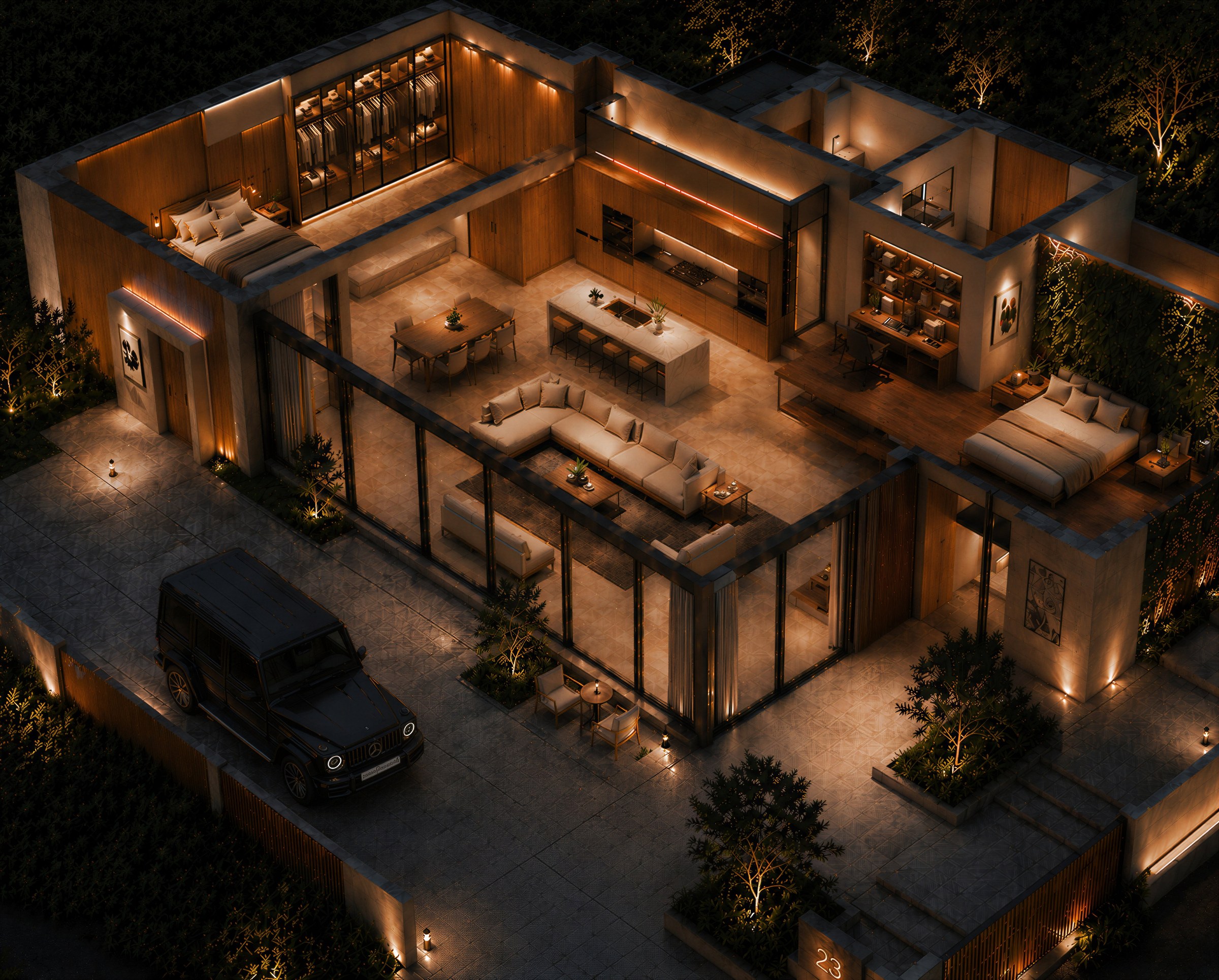
Every room is a chapter of our practice. Hover to discover, click to enter.
Premium interior design from Delhi NCR, for the homes and businesses that ask for rooms which feel inevitable rather than decorated.
Nichedesigns23 is led by Tushar Yadav, founder and creative head, and the hand behind every drawing that leaves the studio. A graduate of the Sushant School of Art & Architecture in Gurgaon, Tushar trained inside two of India's most respected design practices before opening his own studio in 2023.
Those years taught him what to keep. The discipline of detail, the patience of revision, the long conversations with craftsmen. Nichedesigns23 is the studio he set out to build. Considered enough to deliver homes that hold their own beside any in Milan or Antwerp, ambitious enough to take that work across India.
The studio works across residences, offices, hospitality and retail, from apartments in Gurgaon to villas across NCR and projects further afield. Every brief is treated as the only brief. Every drawing is refined until it feels less like a design, and more like a found object.
Every project begins with a conversation, not a moodboard. We build the brief together before we draw a line.
Sourced from Indian workshops we have known for years, finished to the standard of any studio in Milan or Antwerp.
We will never give you a feature wall for the sake of a feature wall. The best interiors are felt before they are seen.
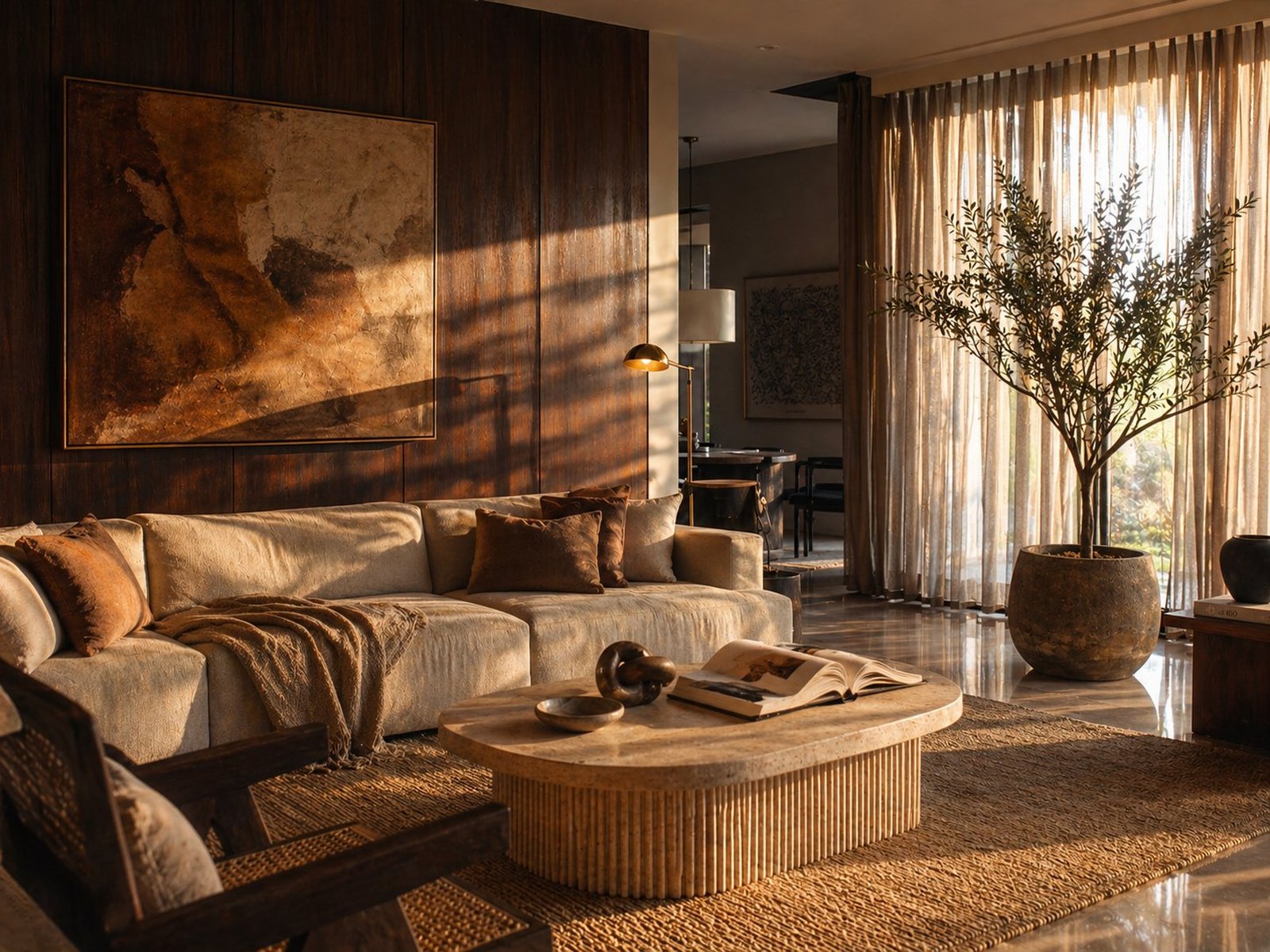
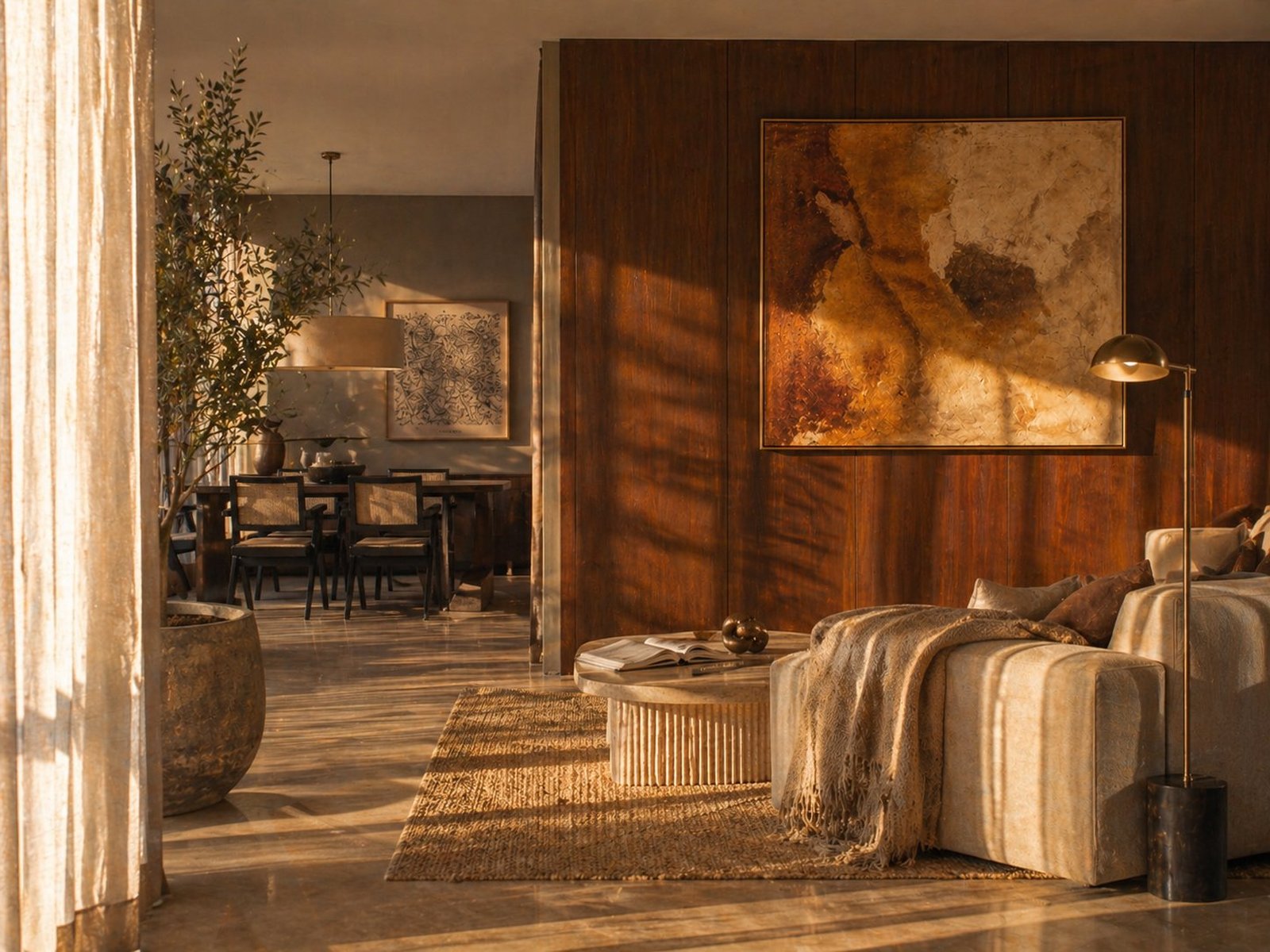
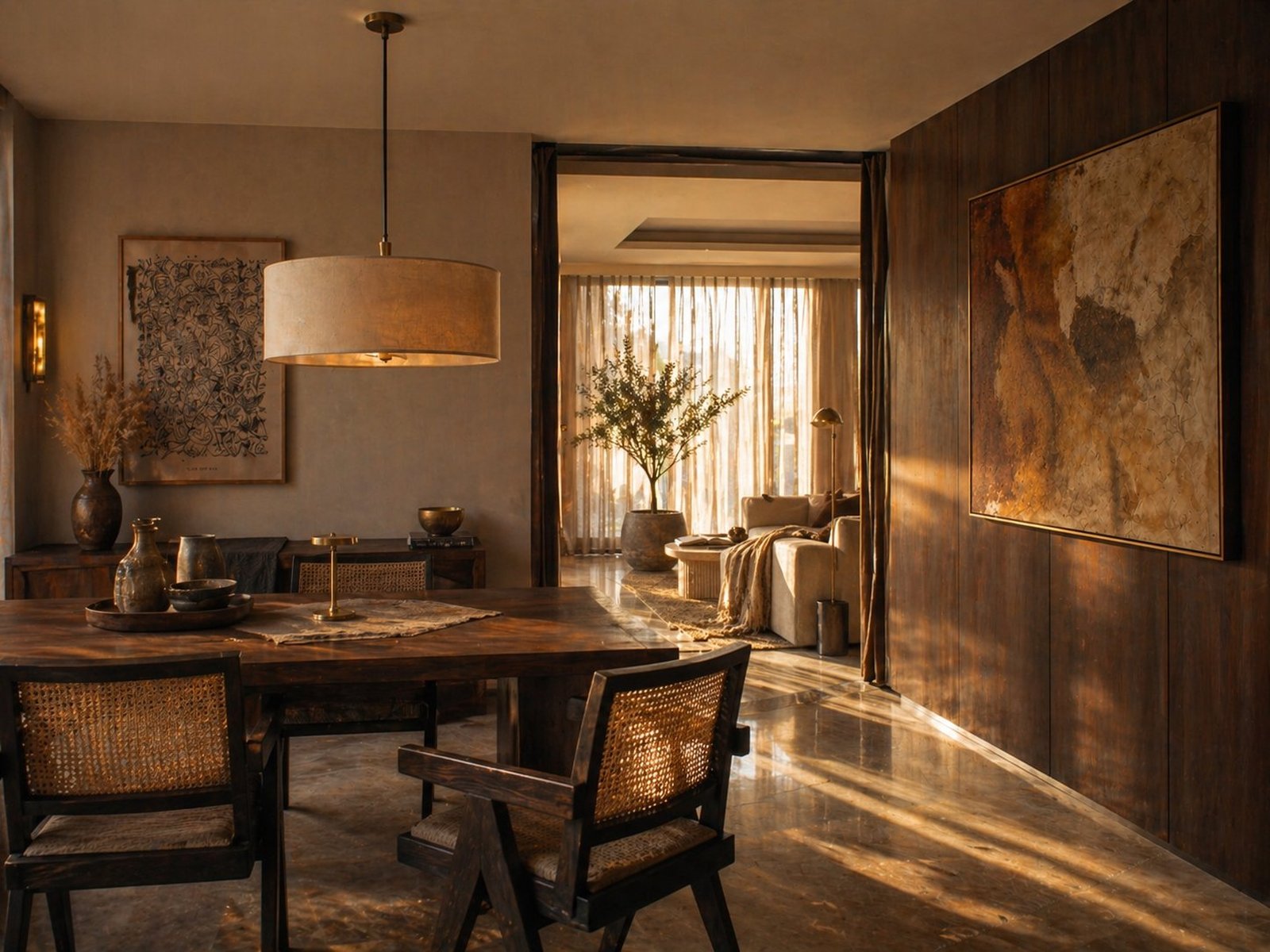
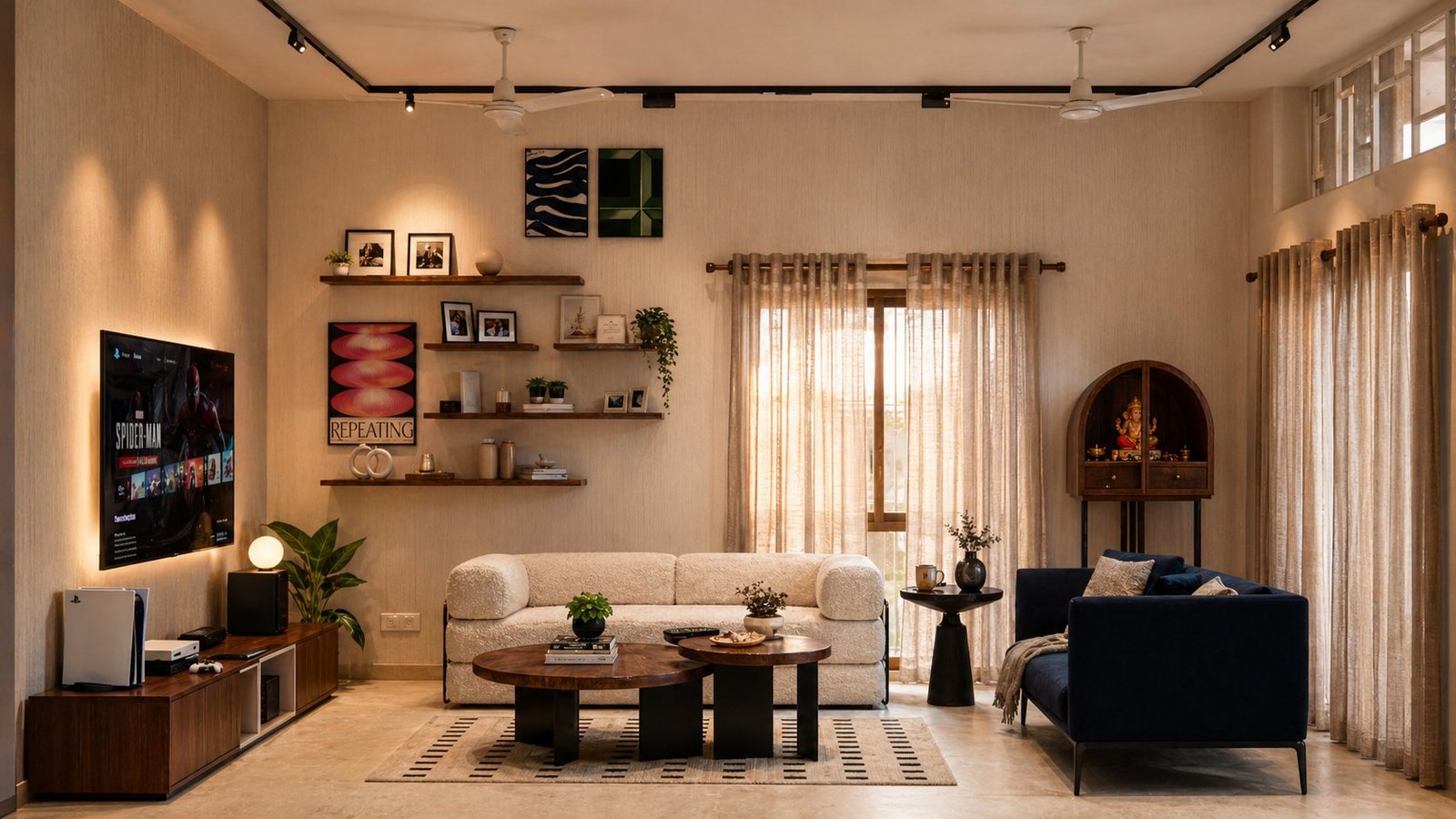
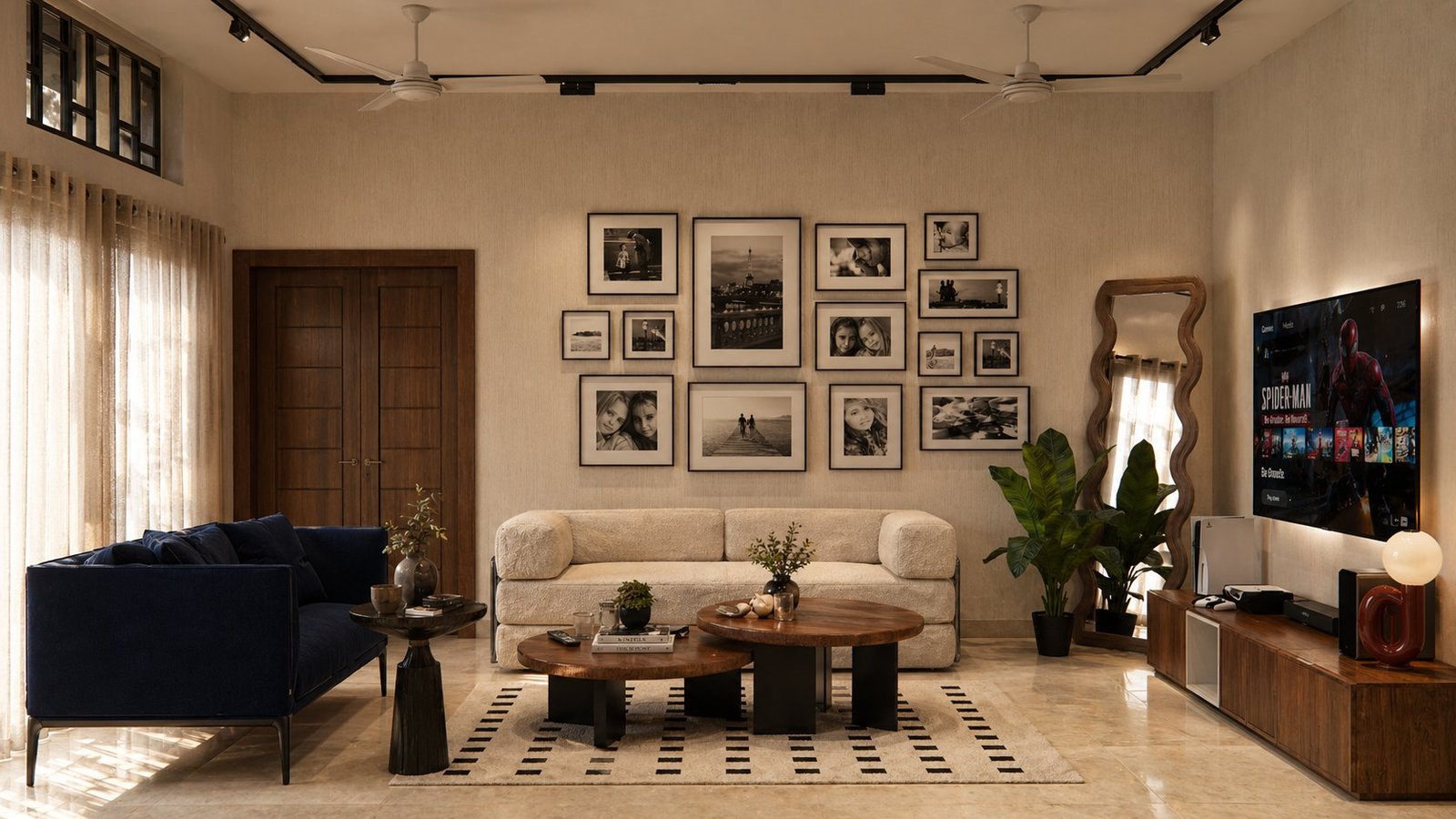
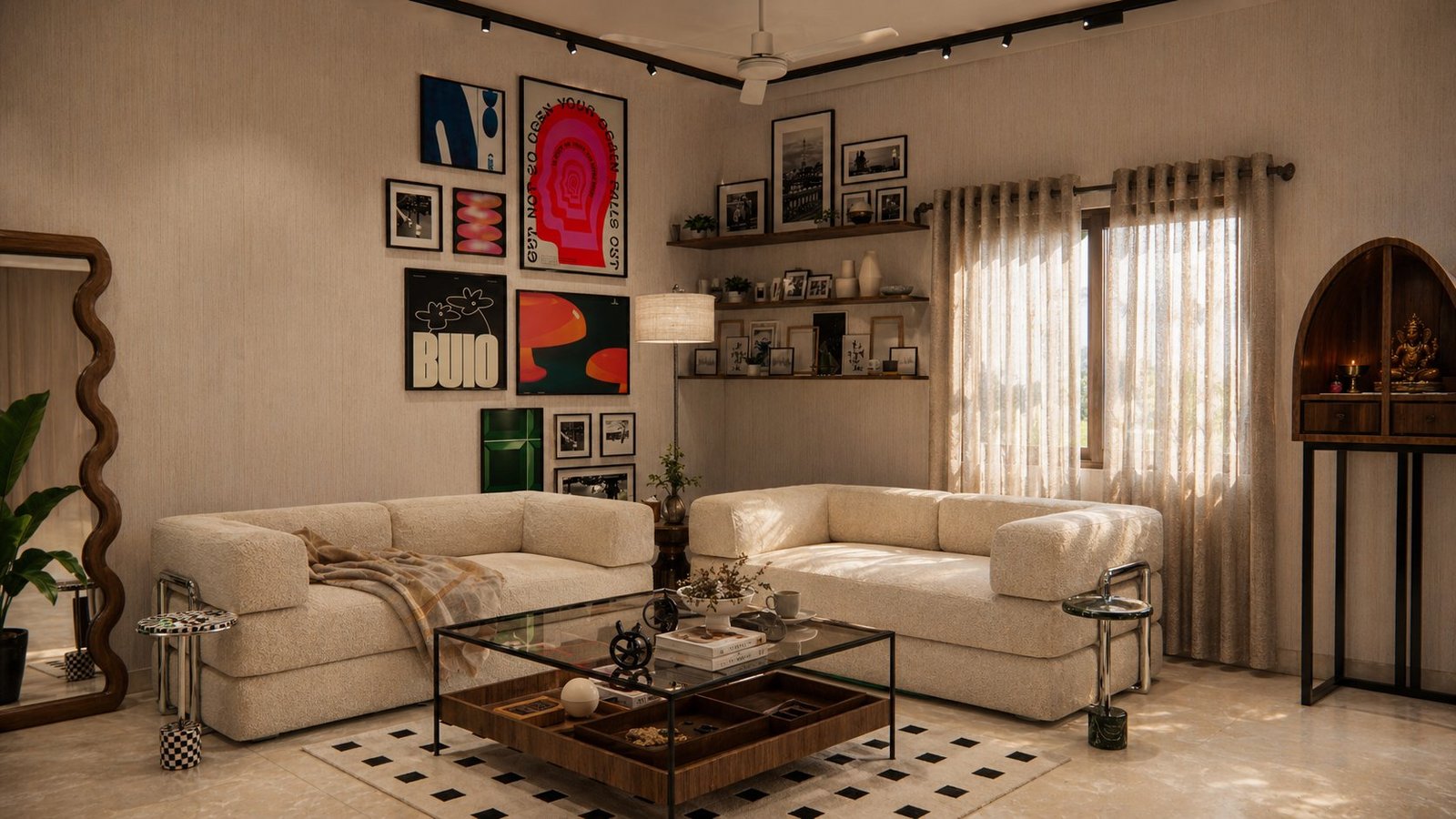
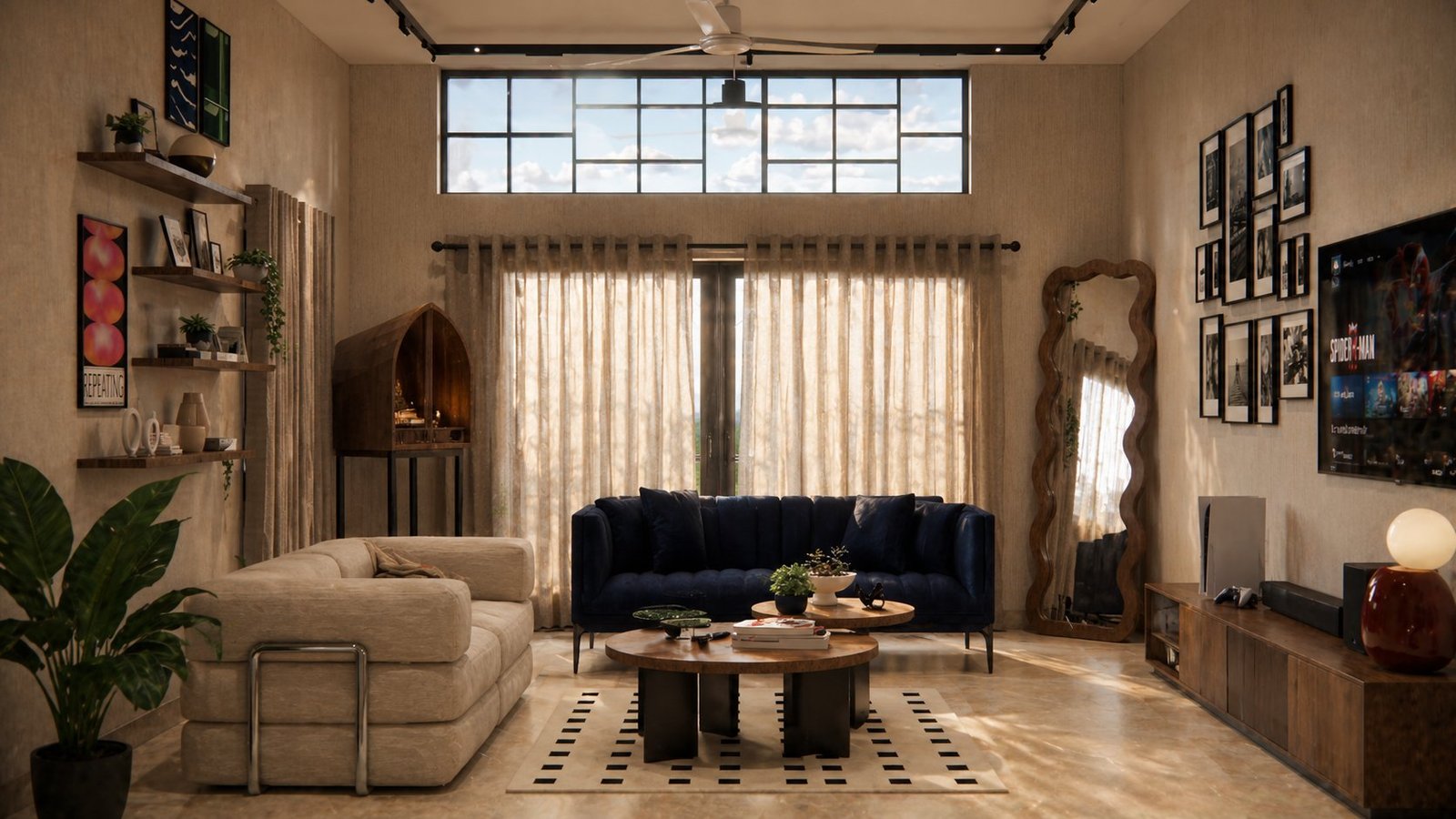
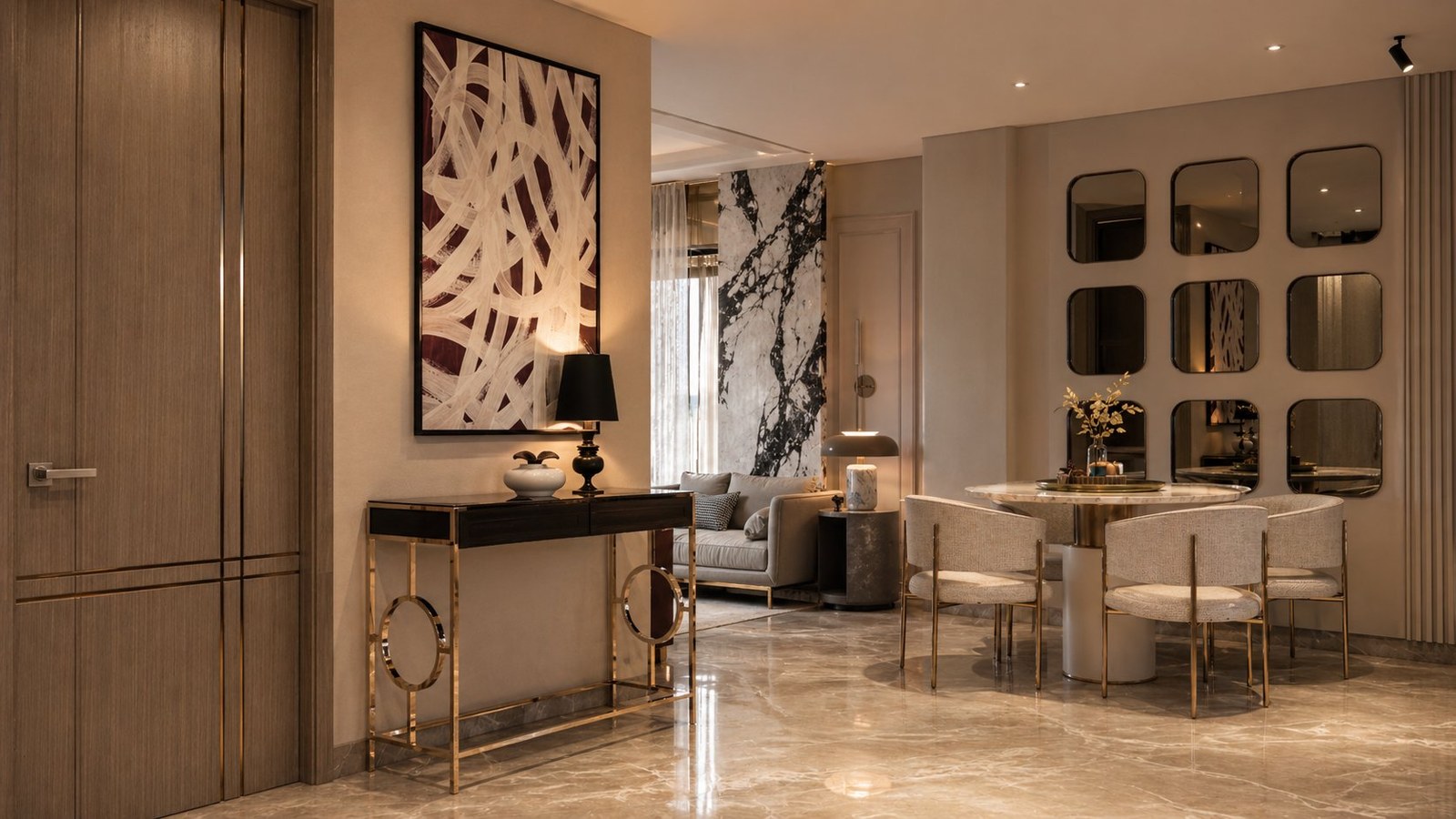
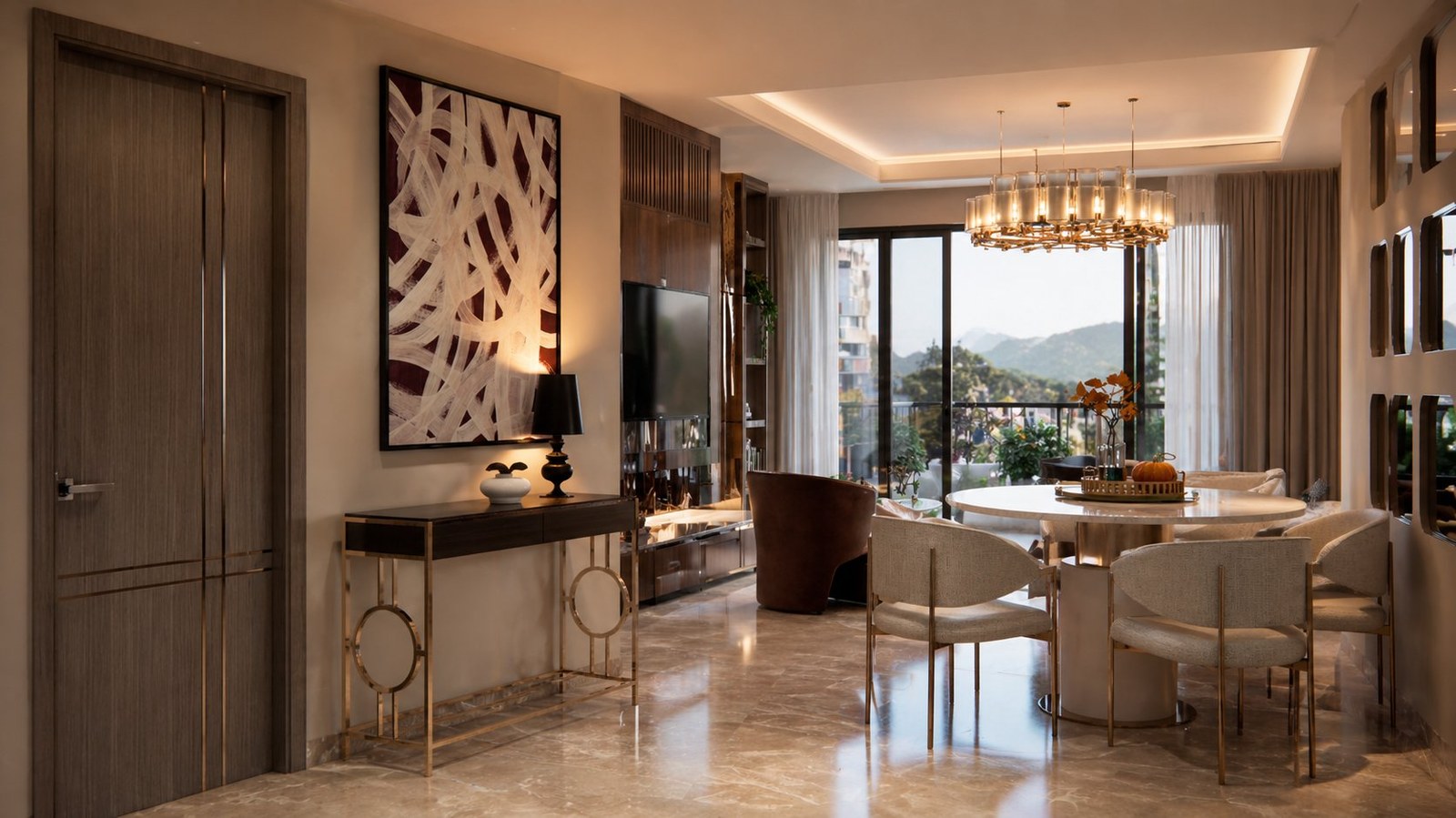
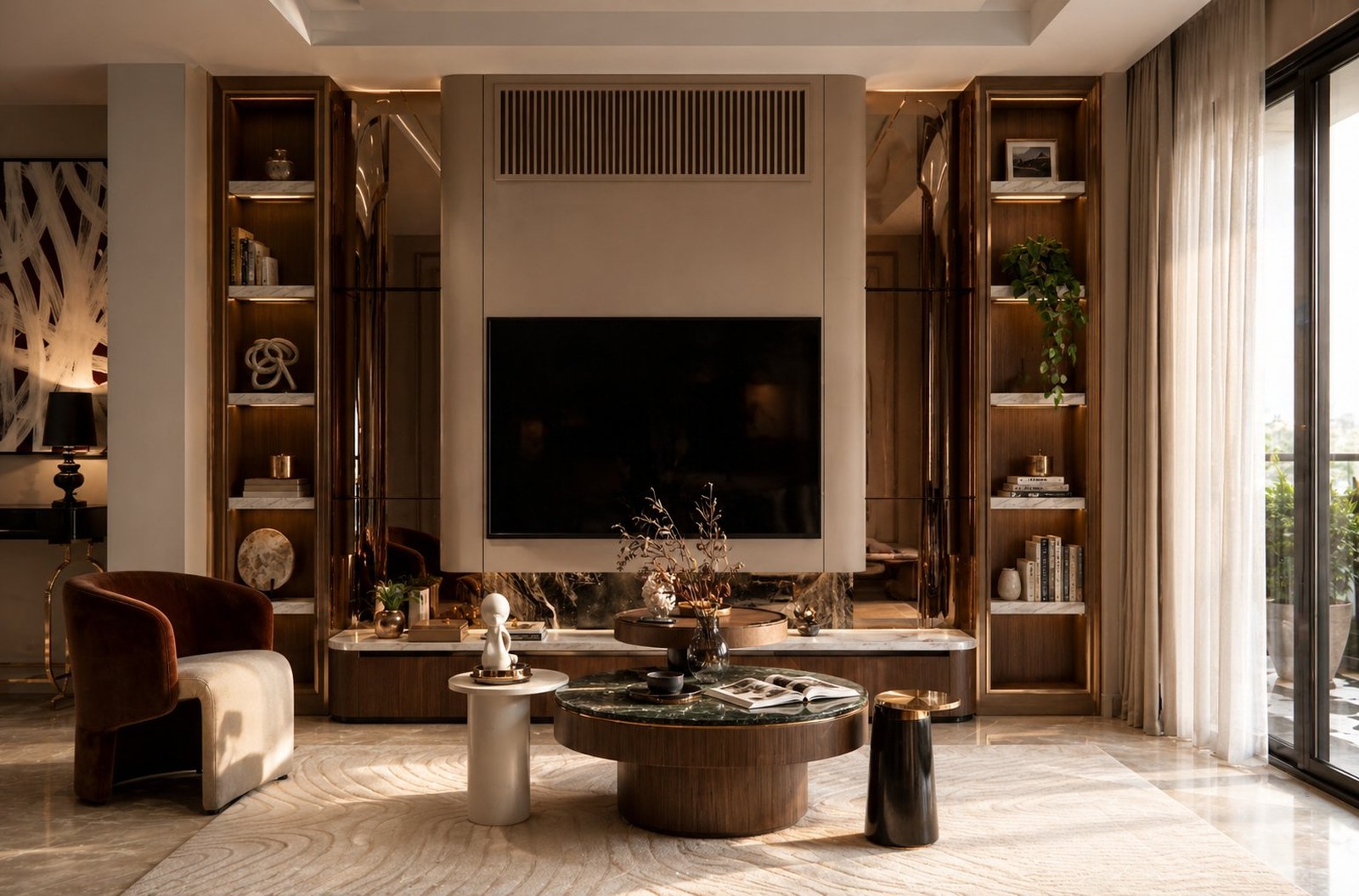
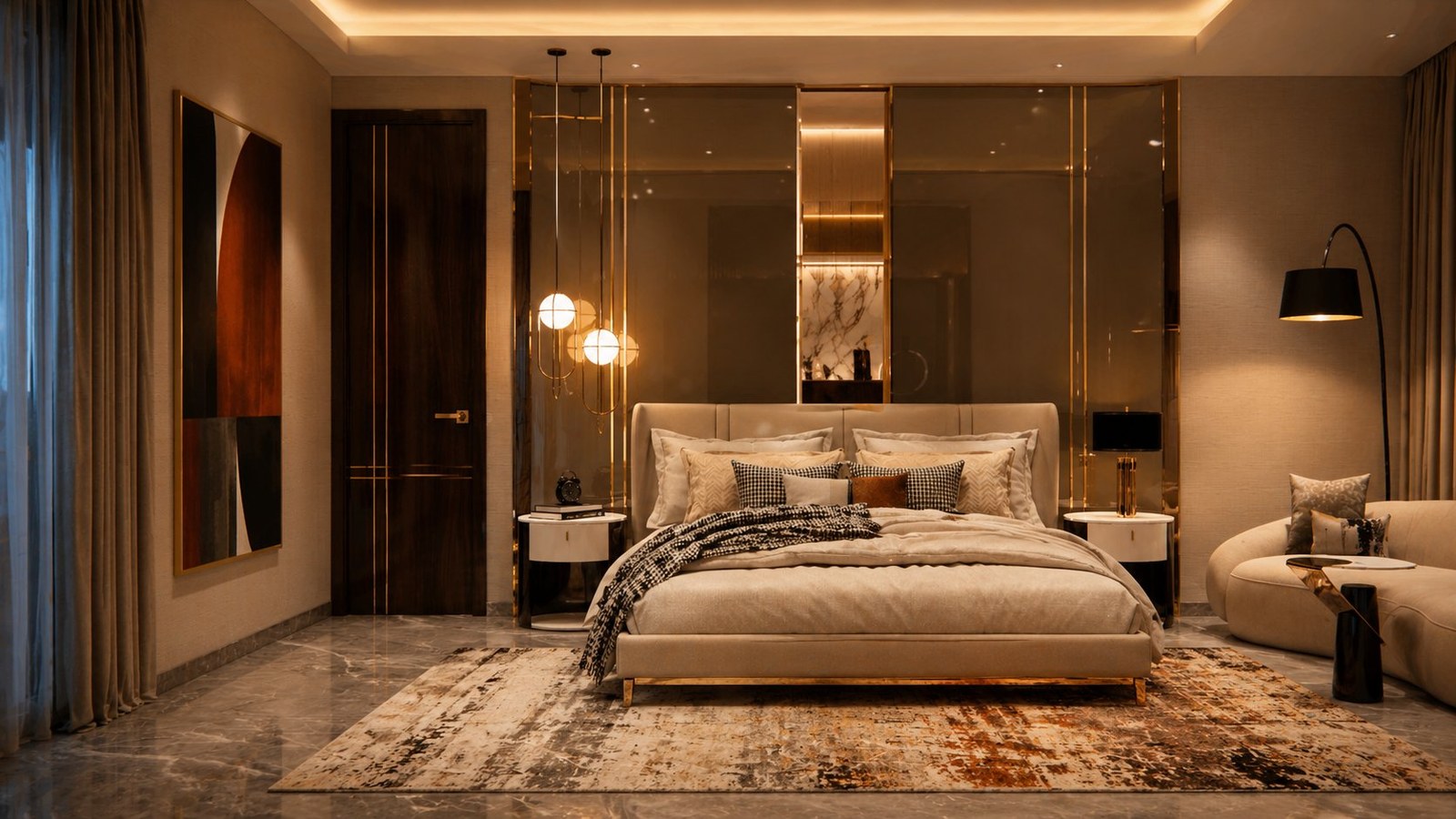
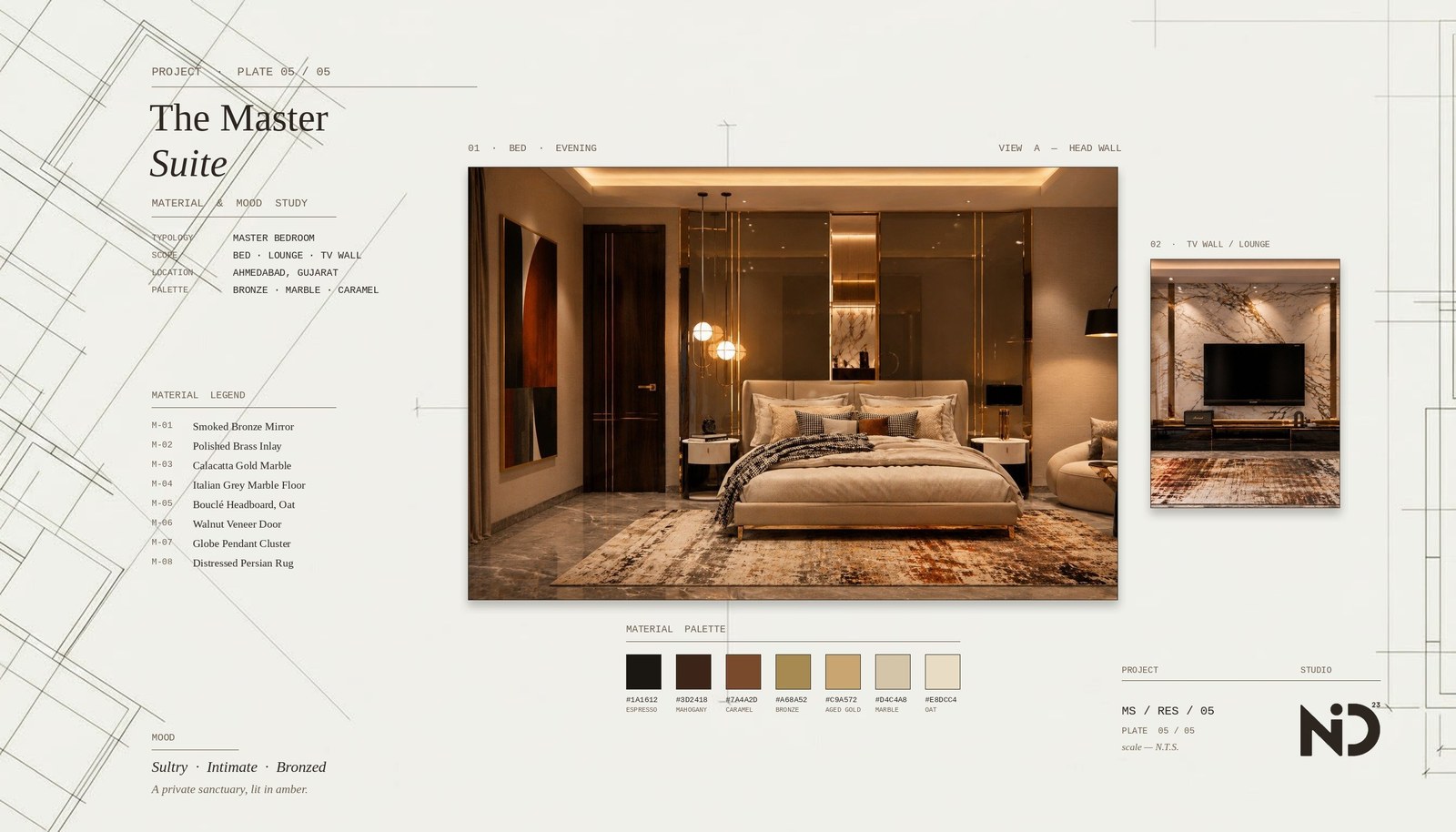
Residential work for clients across India, from premium apartments in Delhi NCR to family terraces in Gujarat. Every home is treated as the only home, and every choice is the right one for the people who live there.
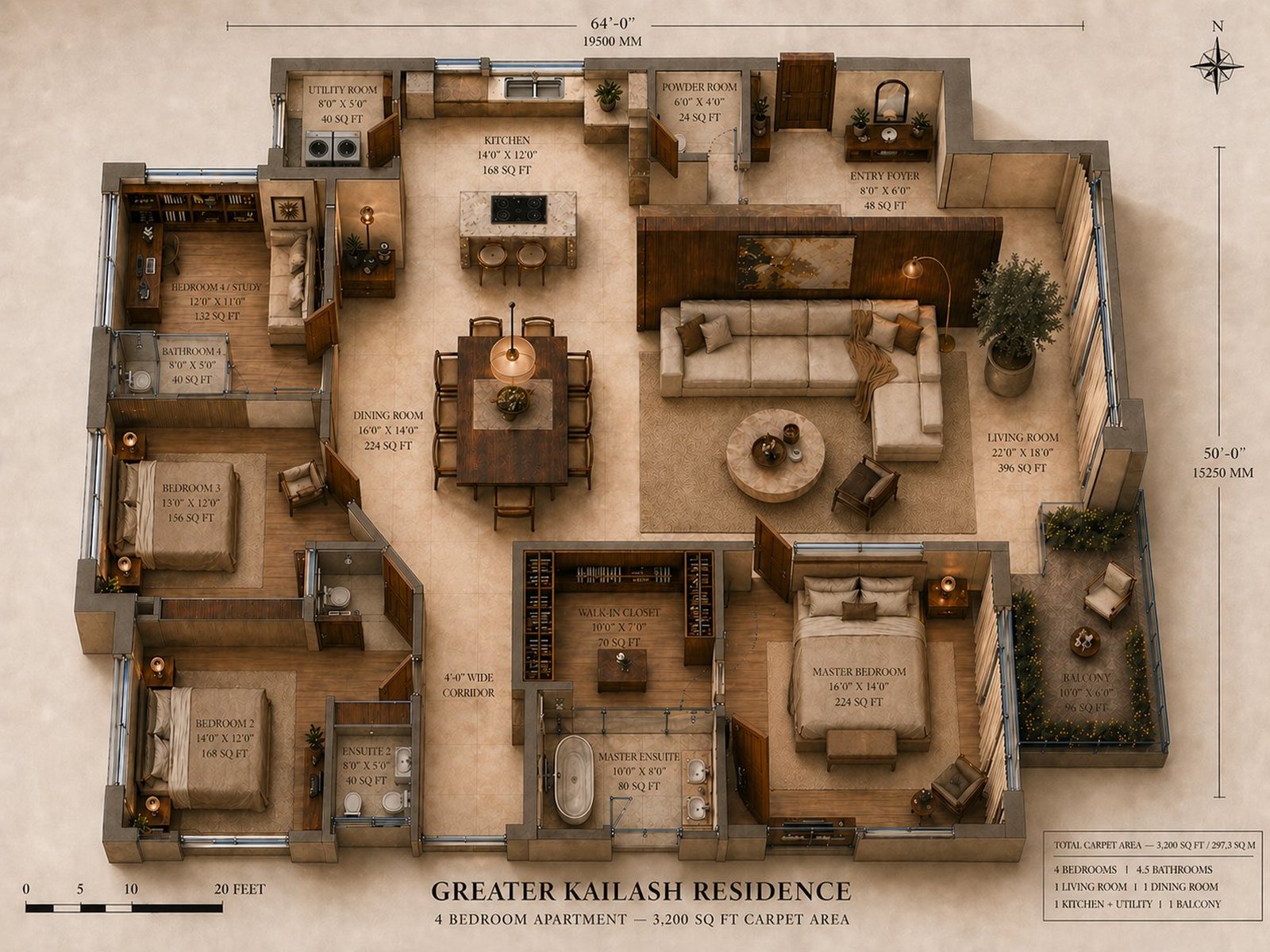
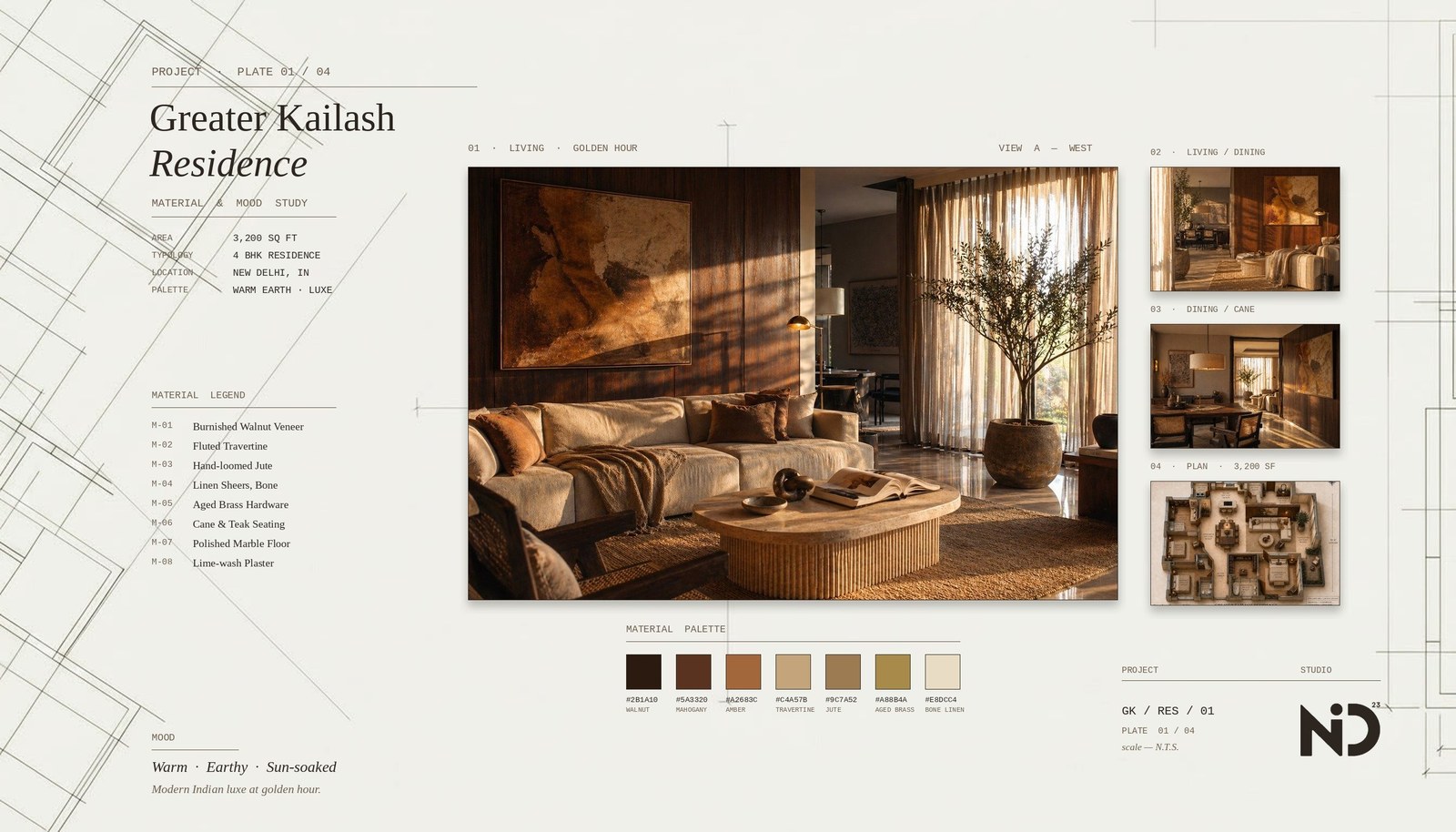
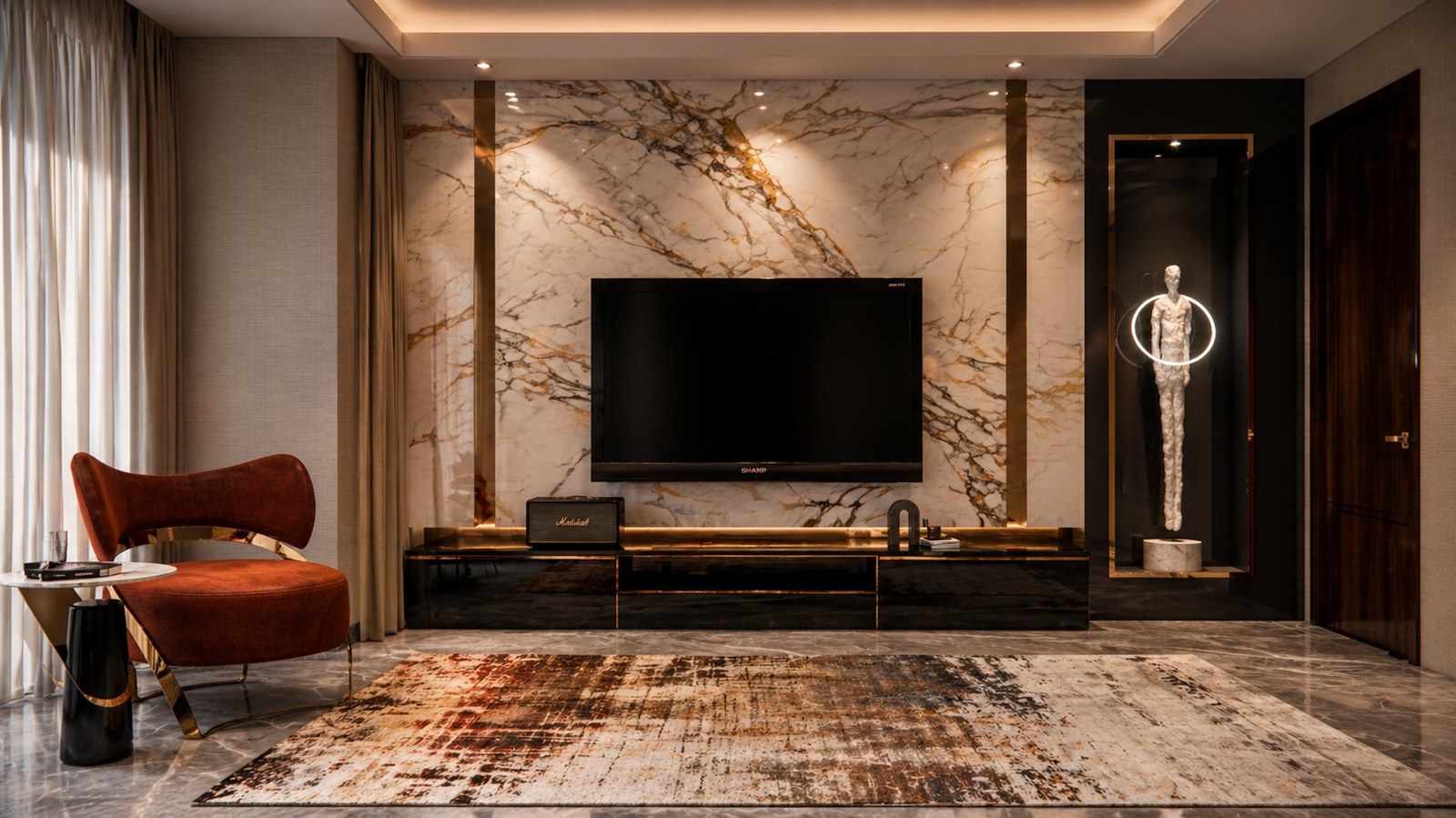
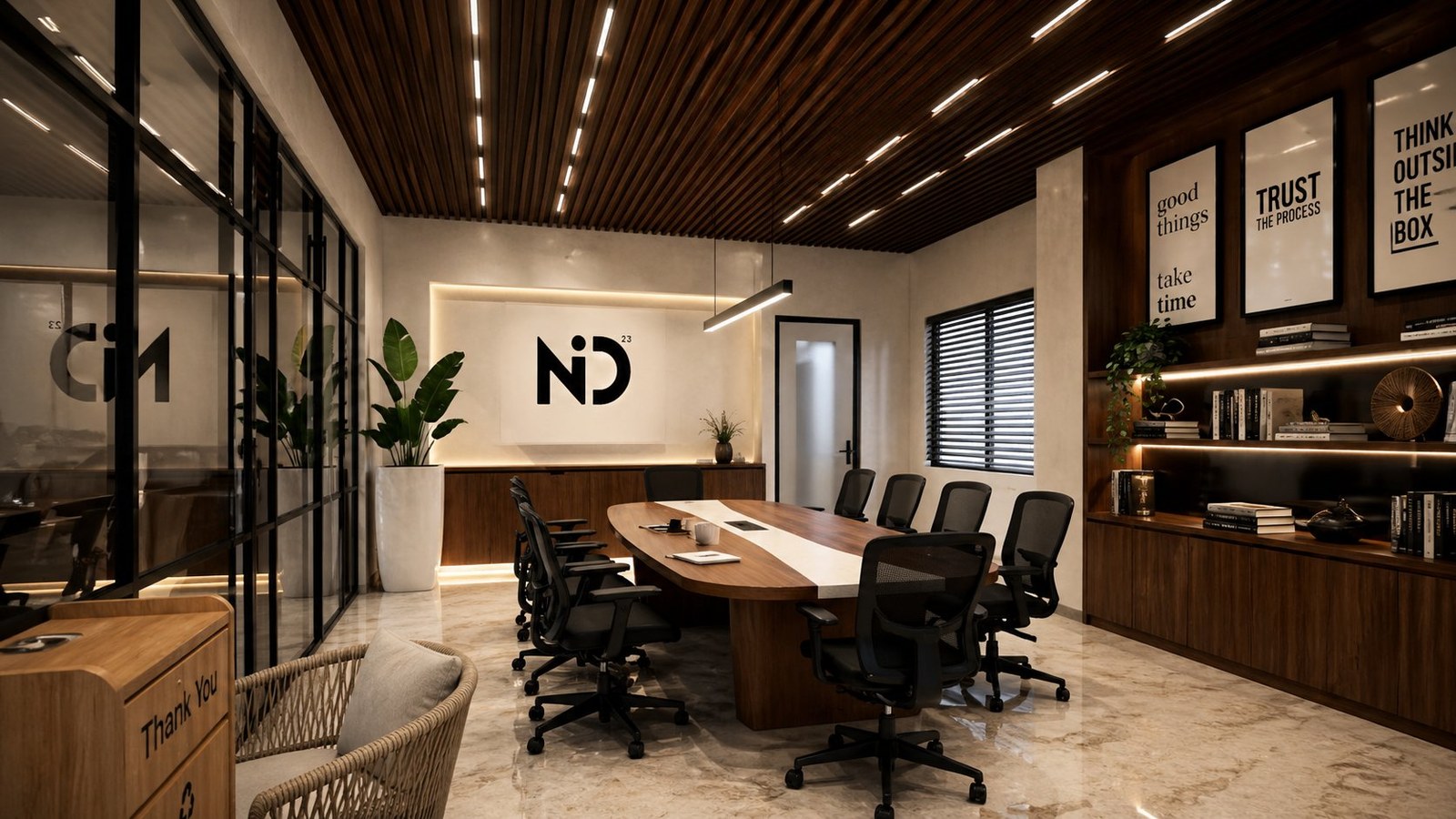
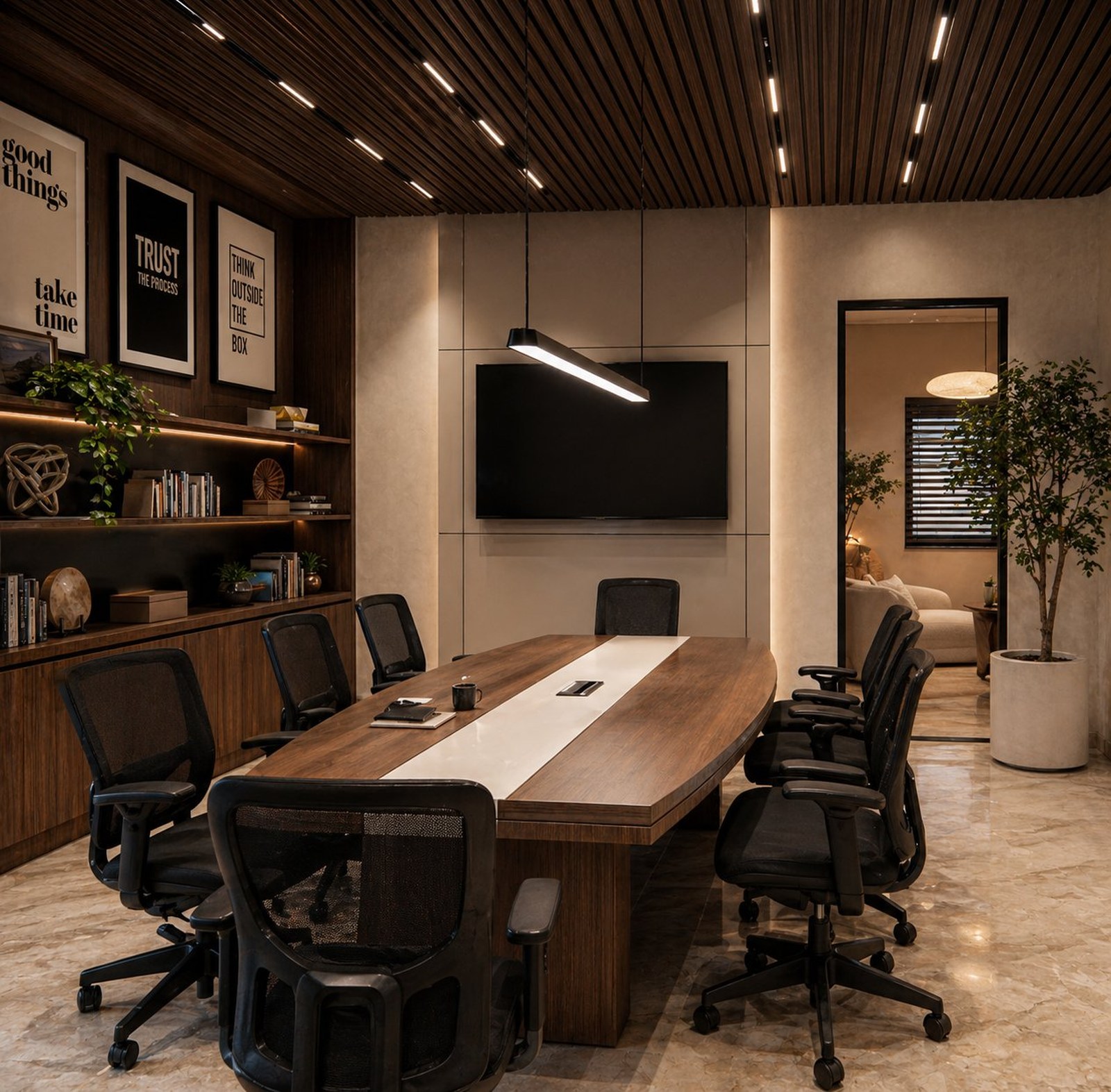
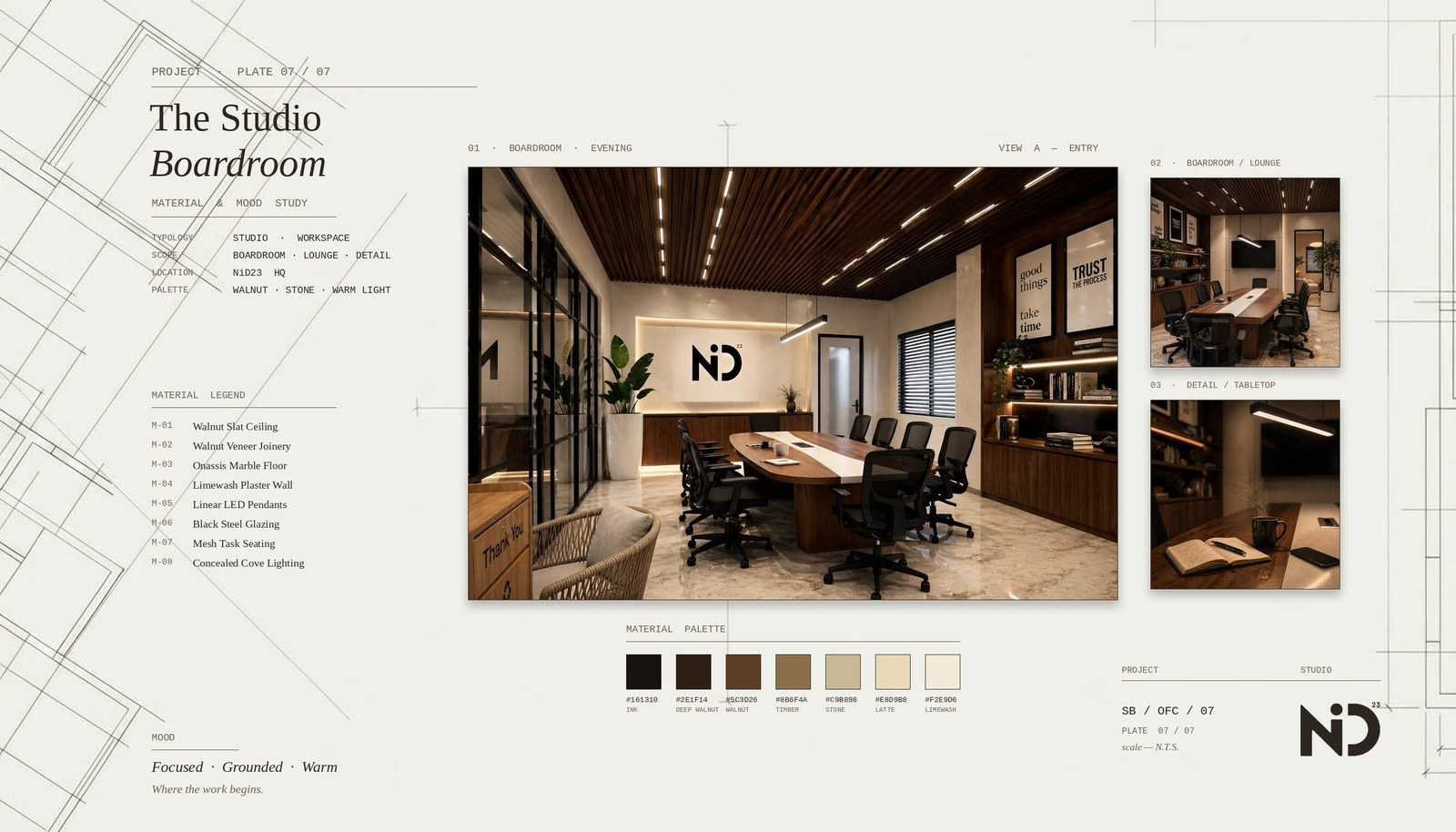
Offices, studios, cafés, retail. Commercial interiors that perform daily — visually composed, operationally honest, and built to age well in heavy use.
Notes from the studio. On the materials we wait for, the projects mid-flight, and the small obsessions of a young practice. Updated when there is something worth saying.
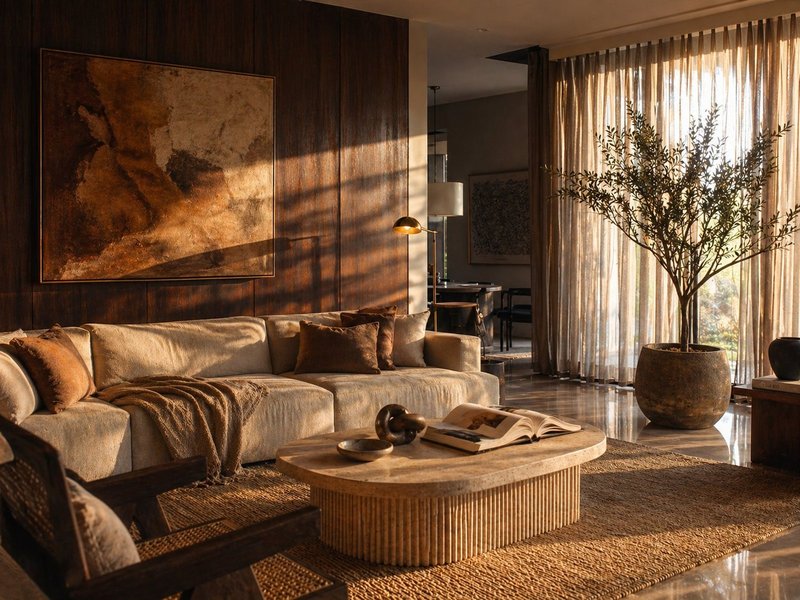
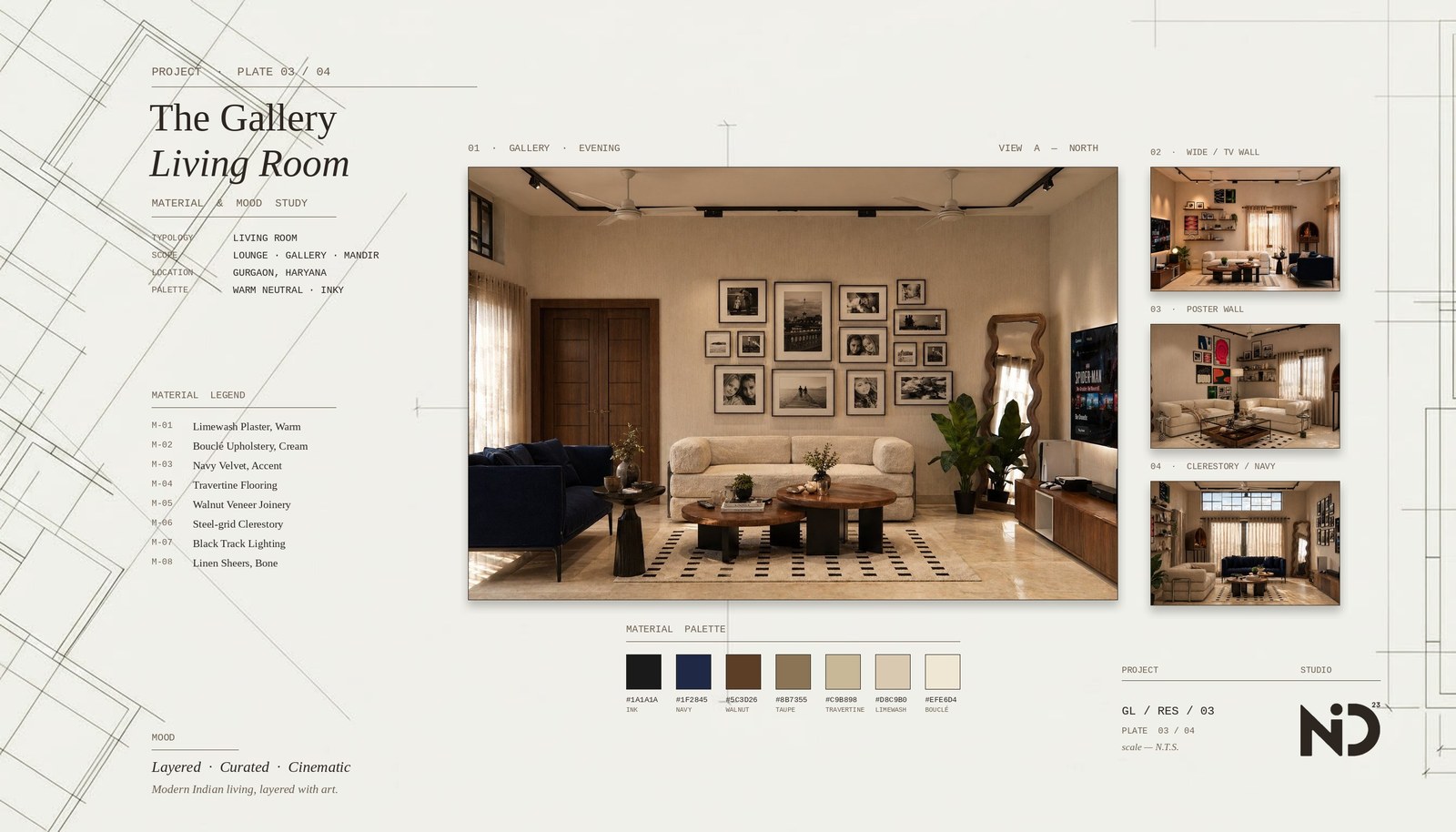
This was the first project where I learned that waiting is part of the design. The clients had asked for travertine in the living room. Not just any travertine. They had seen it once, in a small place in Tuscany, and they wanted that one. The colour of weak tea. Honed, never polished. Veined, but only barely.
The first three slabs that arrived were beautiful. They were also wrong. One leaned too pink. Another carried a kind of veining that looks busy in photographs and feels louder in a room. The third was, honestly, a fine slab. I almost said yes. The clients almost said yes. We were both tired.
That is the moment, I think, when most rooms quietly go wrong. The client is tired. The designer is tired. The contractor wants to pour the next floor. A slab that is eighty percent of what you imagined begins to look like a hundred. It is not.
I asked for six more weeks. The client asked, very gently, if I was sure. I was not sure. I said yes anyway. Six weeks later a slab arrived from a quarry near Tivoli that was the right one. The colour of weak tea. Honed. Veined, but only barely. We laid it on a Tuesday.
The room is finished now. Nobody who walks in talks about the floor. They talk about the cane chairs, the brass pendants, the way the late light folds across the dining wall. The floor is just the floor. And that, I am beginning to understand, is what the right floor is supposed to do. Disappear under everything else, so the room can be the room.
Six weeks of waiting. Six weeks of nobody noticing, later. I think nobody noticing is the highest compliment a material can earn.
Notes from the most stubborn project of the year. A terrace that had to hold a pergola, a bougainvillea, and a family that lives one floor below.
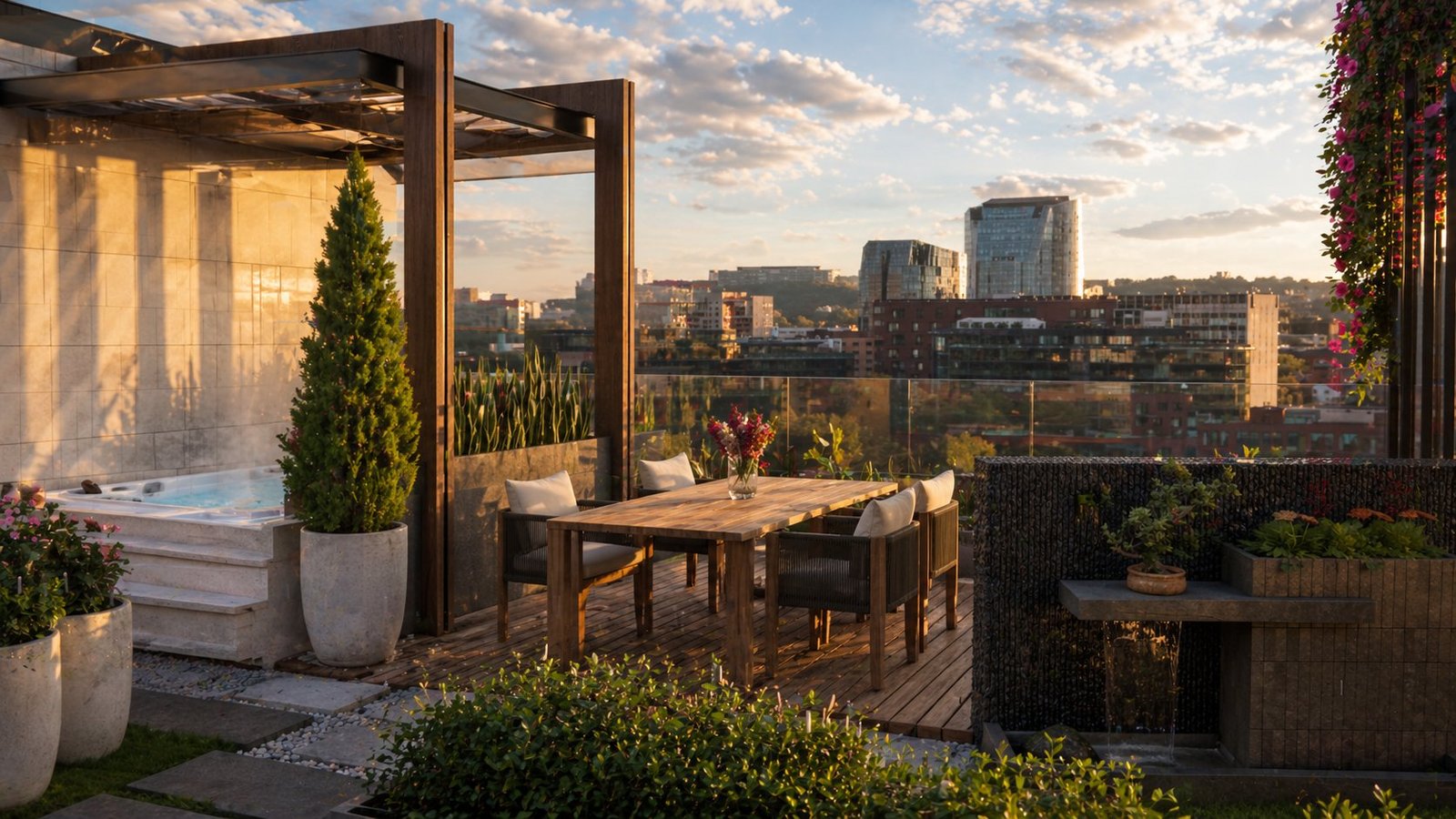
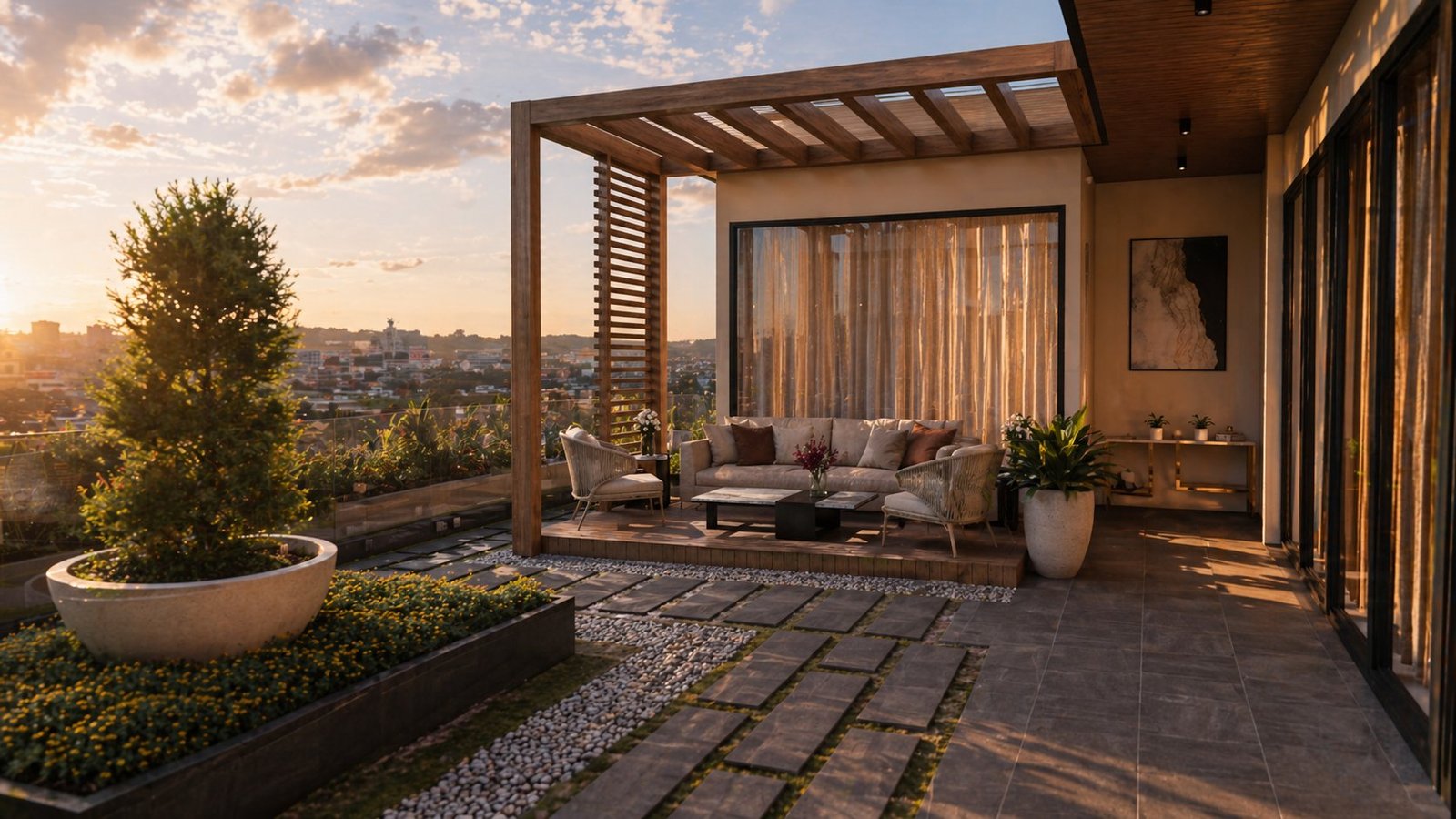
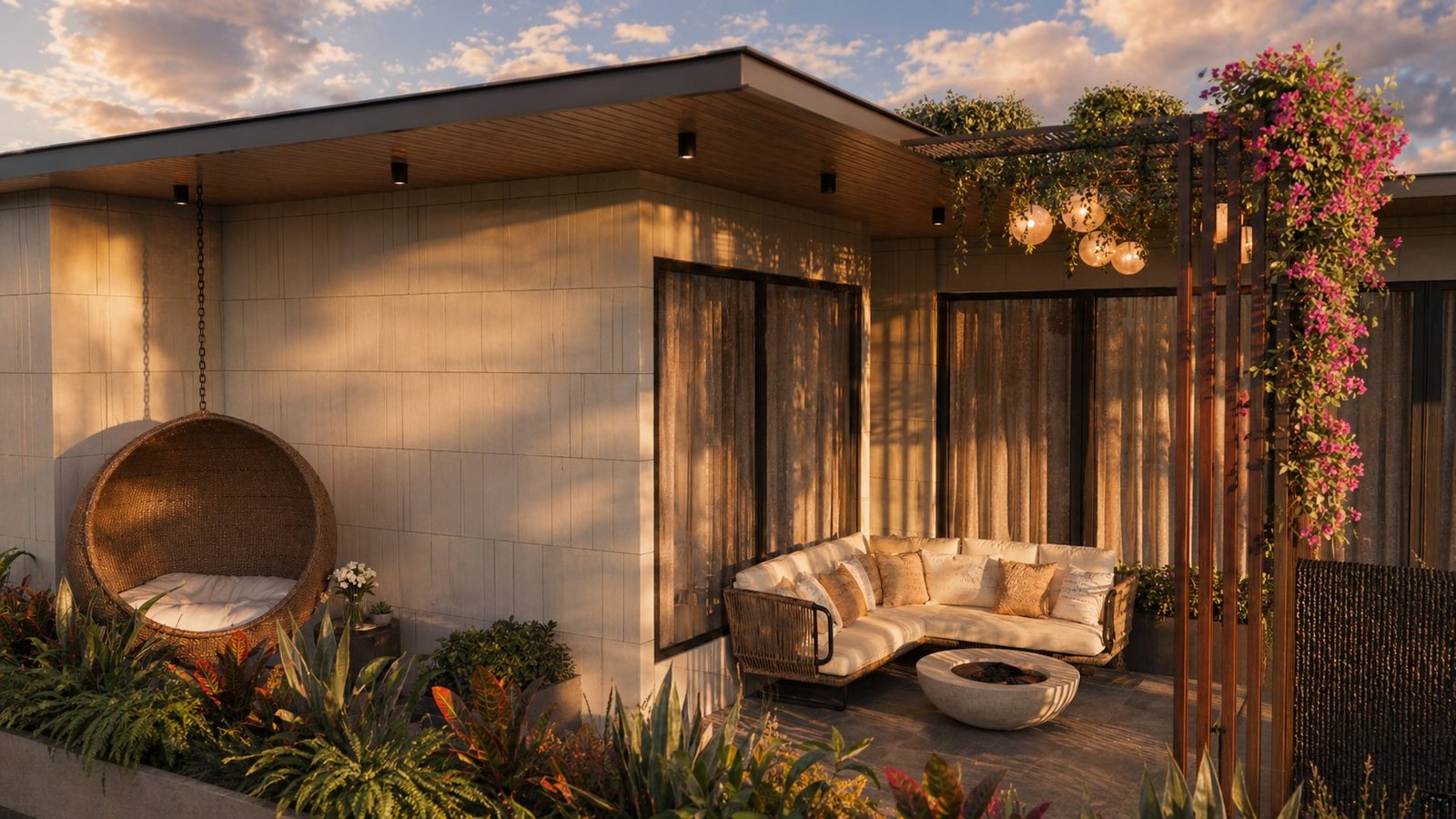
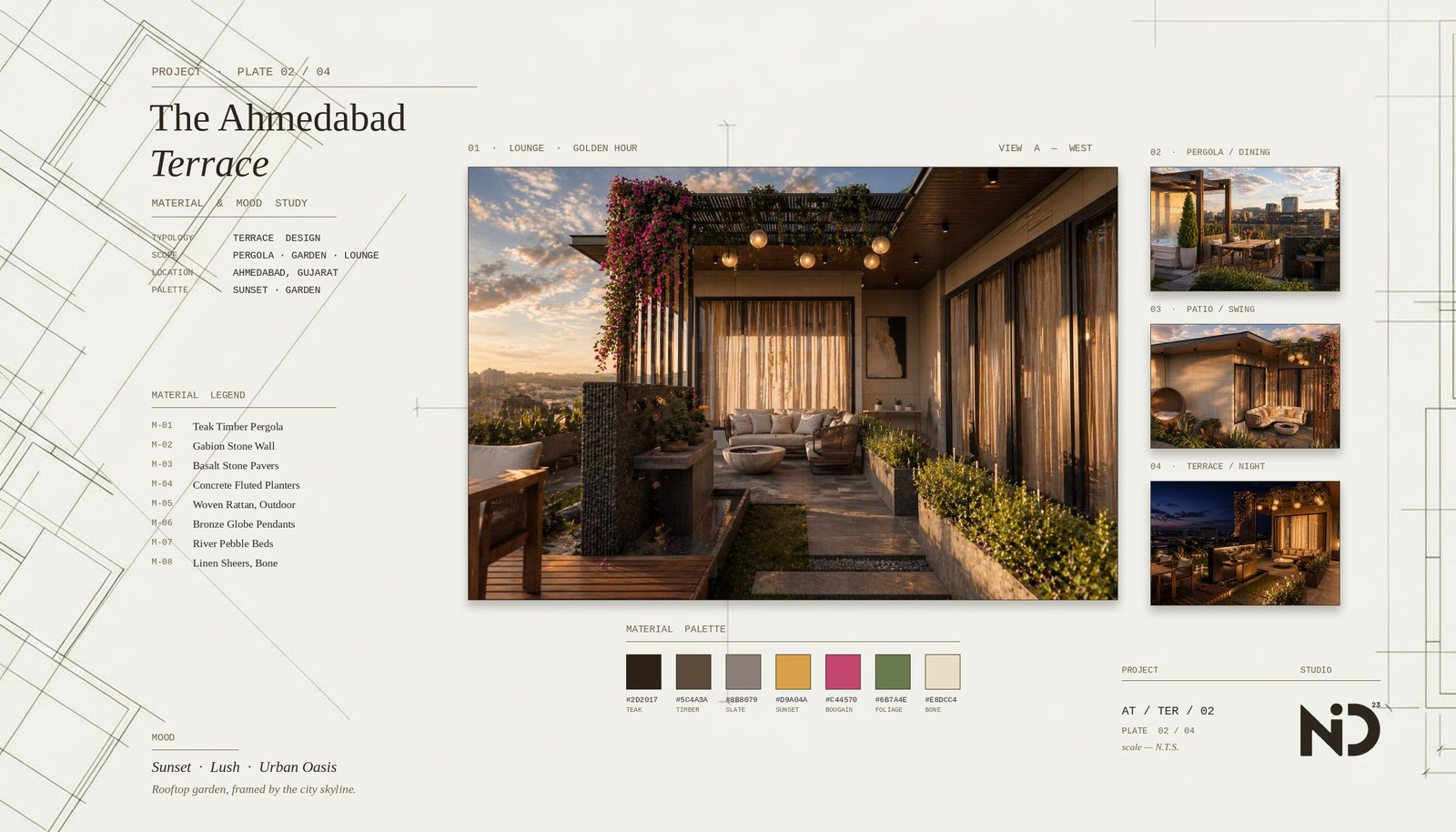
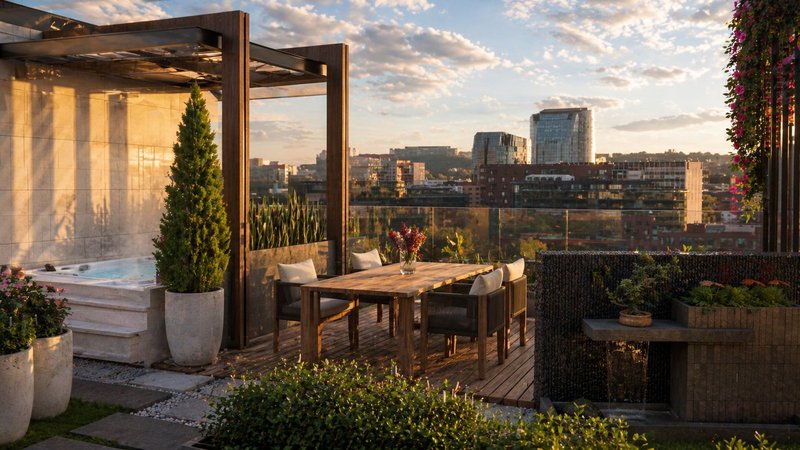
I am writing this from the unfinished pergola at the Ahmedabad terrace, on a folding chair the contractor lent me, and the bougainvillea is doing the thing it does in April. Showing off. This was the most stubborn project of the year. Today is a soft day.
The brief sounded simple, in the way that simple briefs are never simple. A terrace. A pergola. A garden that did not look like a garden. A lounge for evenings, but the family that lives one floor below should not feel watched. Ahmedabad in summer reaches forty three by lunch. Solve for all of that.
The first thing I did was lie to myself. I told myself this would be quick because the floor plate was small. Small floor plates are never quick. They are the slowest. Every choice has to do four things at once.
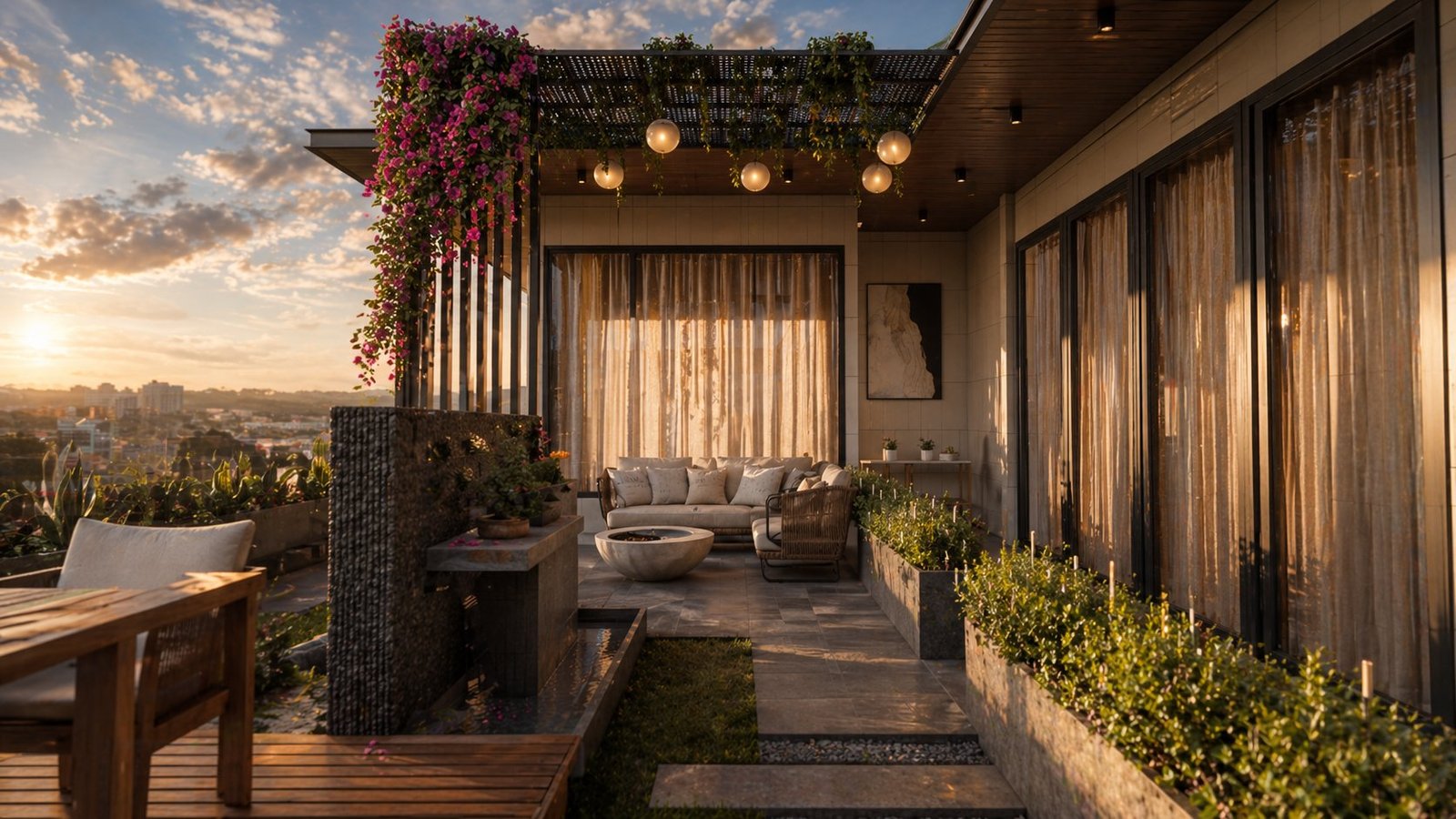
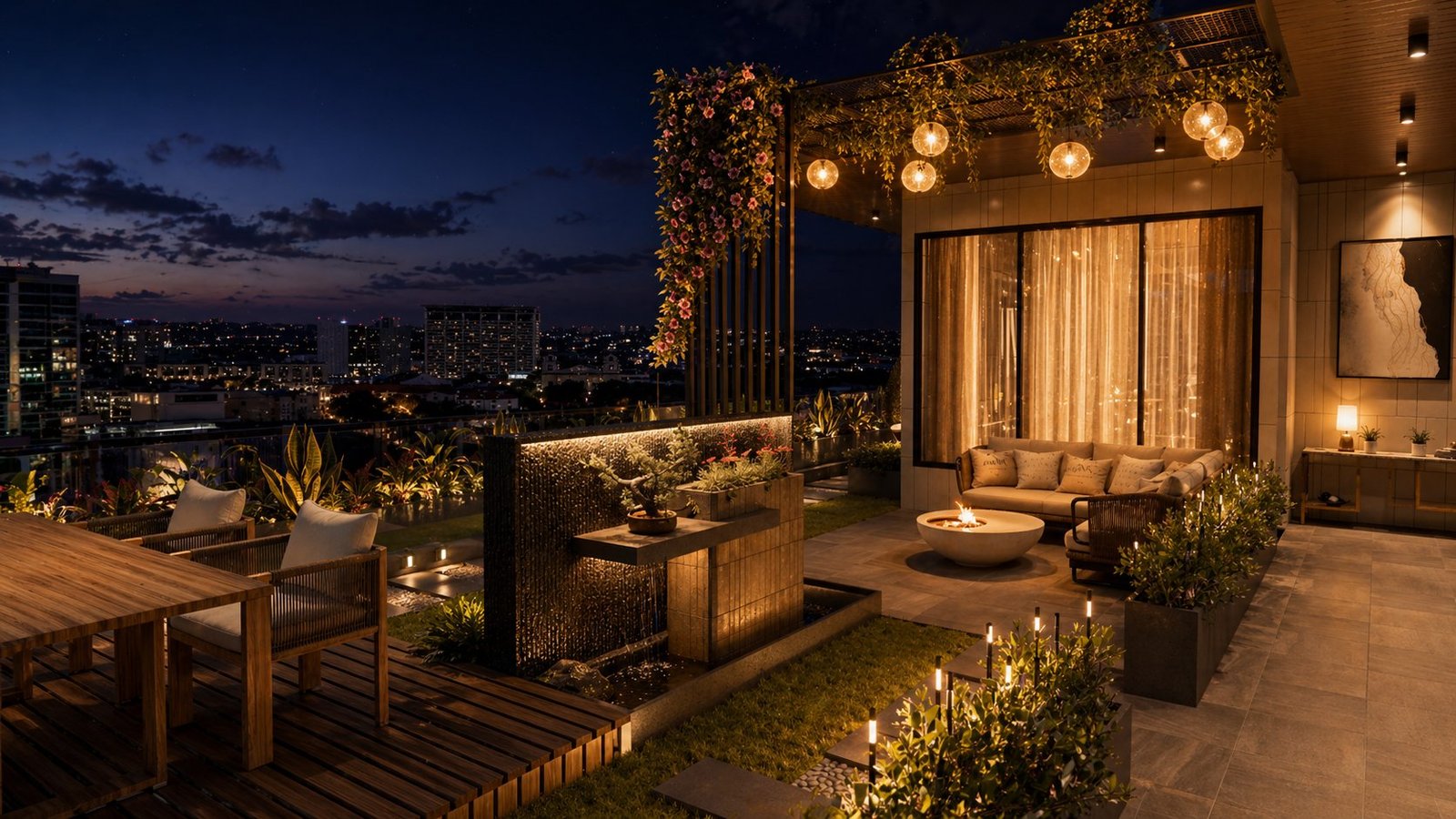
The pergola became the answer to almost everything. Teak, oversized for the space on purpose, with battens spaced just narrow enough to throw real shade by eleven in the morning. We hung lanterns from it because the clients wanted to use the terrace at night, and because, honestly, lanterns and bougainvillea is a combination that has never been wrong in the history of architecture.
The hardest part was the privacy. We could not put up a wall. The clients wanted to see the trees beyond the compound. We could not put up a screen. Too obvious. In the end we used planting. Olive on the south side. A single old jasmine on the west. Low cane planters around the lounge. By the fourth month the cane was full enough that the family below could not see who was sitting up here at all. The clients had not asked for jasmine. The jasmine, somehow, became their favourite thing in the room.
I am still on the folding chair. The contractor has gone for tea. The bougainvillea is still showing off. Some days the work is patient. Some days you sit on a folding chair at golden hour and remember why you wanted to do this in the first place.
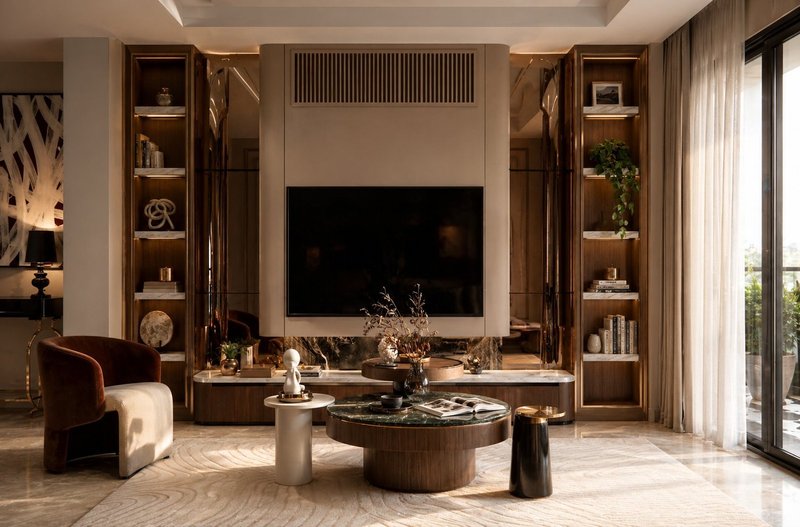
The first material we settled on, and the last one anyone notices. A note still being written, on why the walls of the Vikaspuri home are not paint.
A note from Tushar
This entry is still being written. Vikaspuri is mid handover and I want to live with the walls a little longer before I commit to what I think about them. An early sketch is below. The proper essay will come in a few weeks.
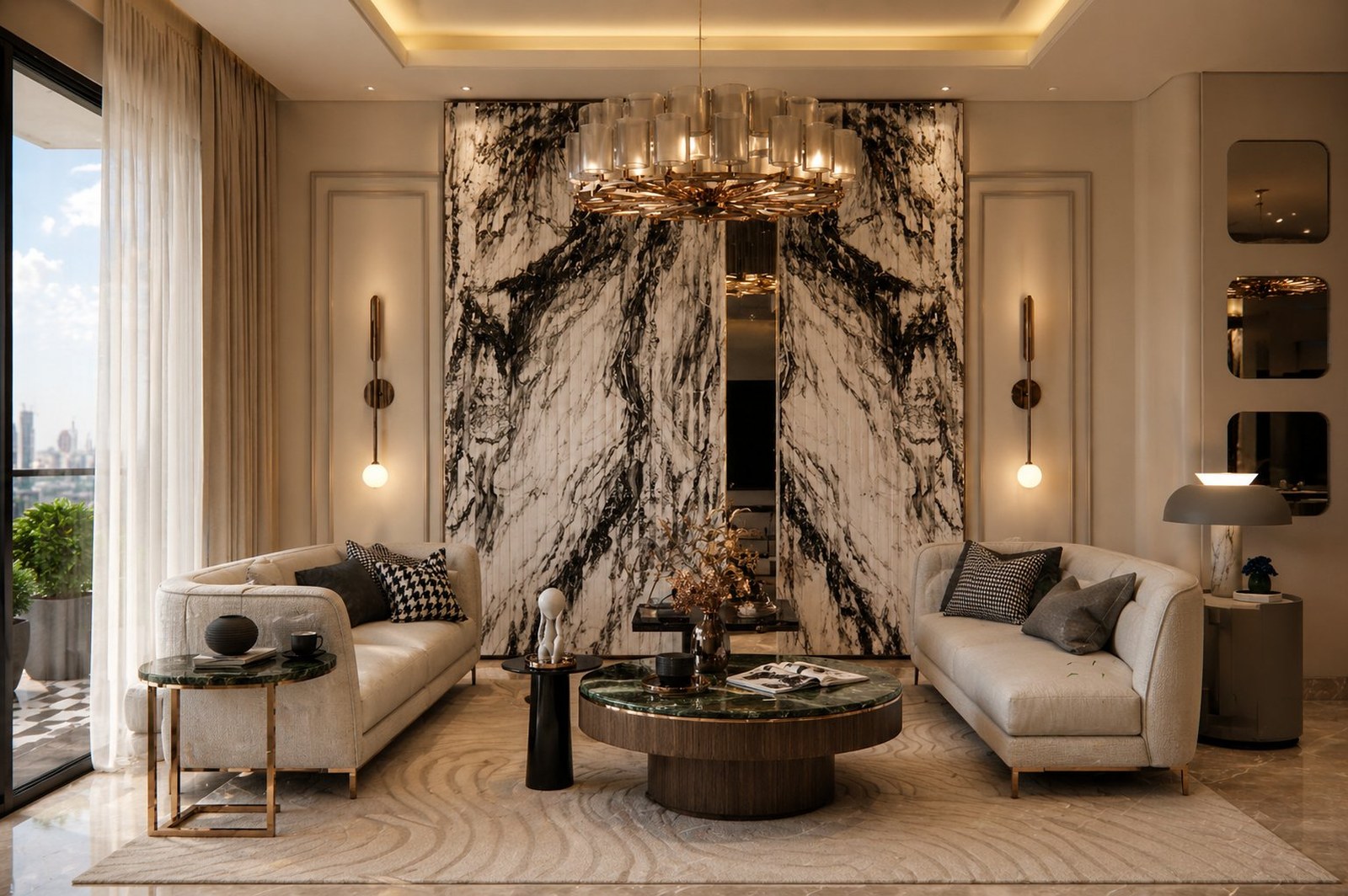
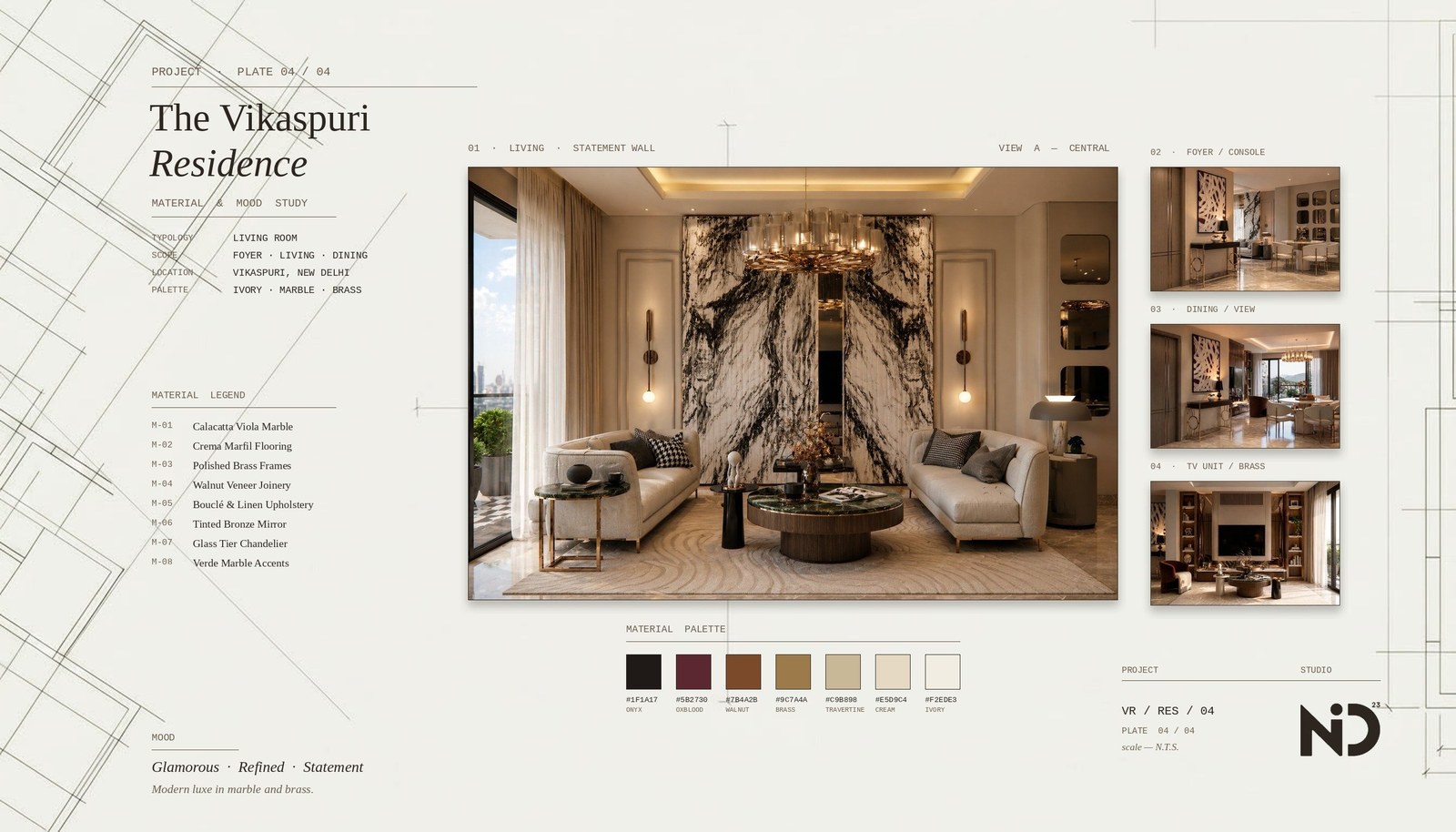
The first material we settled on at Vikaspuri was the one nobody would ever ask me about. A wall finish, in a home that had a Calacatta Viola statement wall, a chandelier, and a foyer of mirrored panels. By the time the project was photographed, no client had said a word about the plaster. They had said many words about the marble. This, I think, is what plaster is for.
We did not use paint. We used lime wash, mixed by hand on site, and that is a very different thing. Paint sits on a wall like a sticker. Lime wash settles into it. By the second week the wall is no longer a surface. It is a depth. The light falls into it differently at every hour of the day.
The decision was practical first. Vikaspuri sits in west Delhi, where the dust is its own season. Paint reveals every fingerprint and every monsoon stain. Lime wash is alkaline, naturally antimicrobial, and forgiving. A small repair vanishes into the wall within a week. For a family that actually lives in their living room, this felt like the more honest finish.
More to come. I am still thinking about how to write the part about the marble.
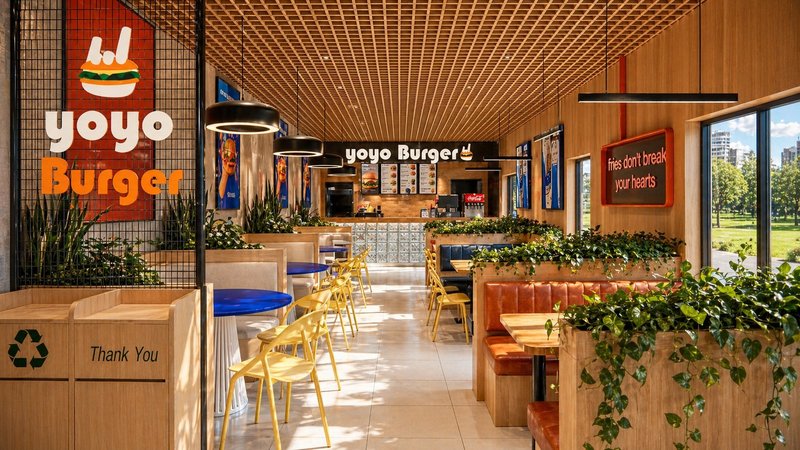
My first commercial project, on the Delhi to Mumbai expressway. What I learned about brand, about ceilings, and why the colour of a tabletop changes after dark.
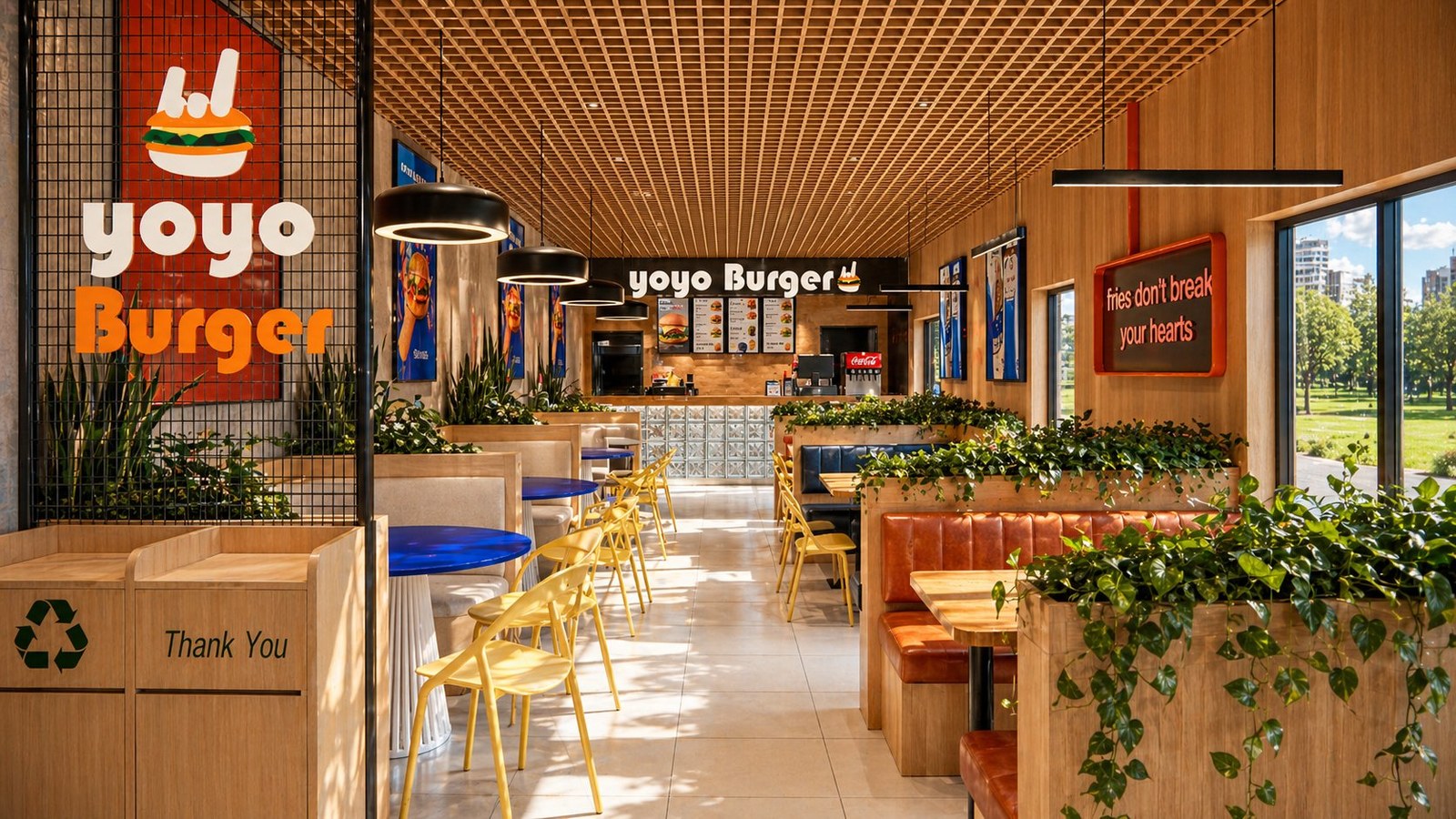
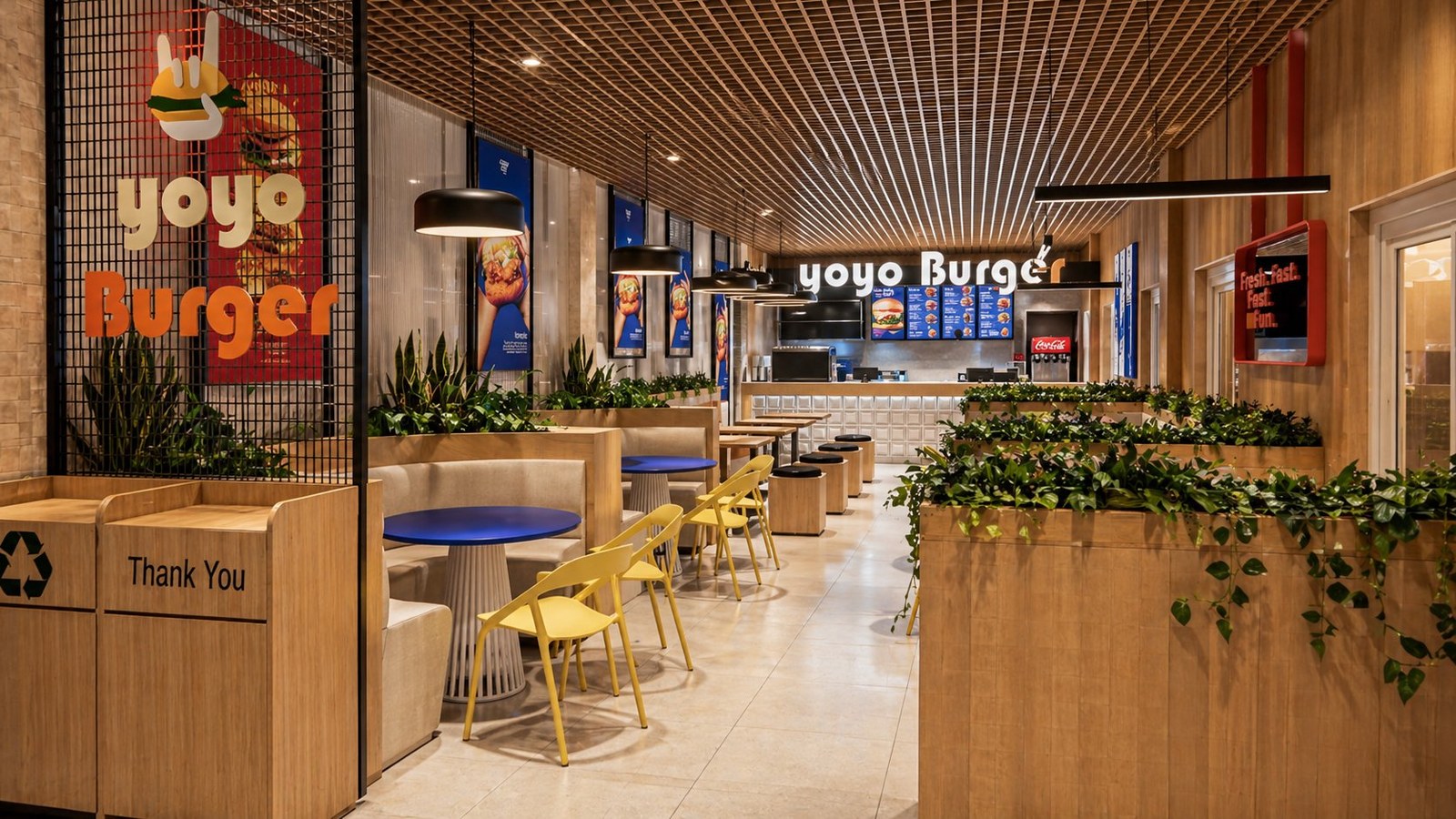
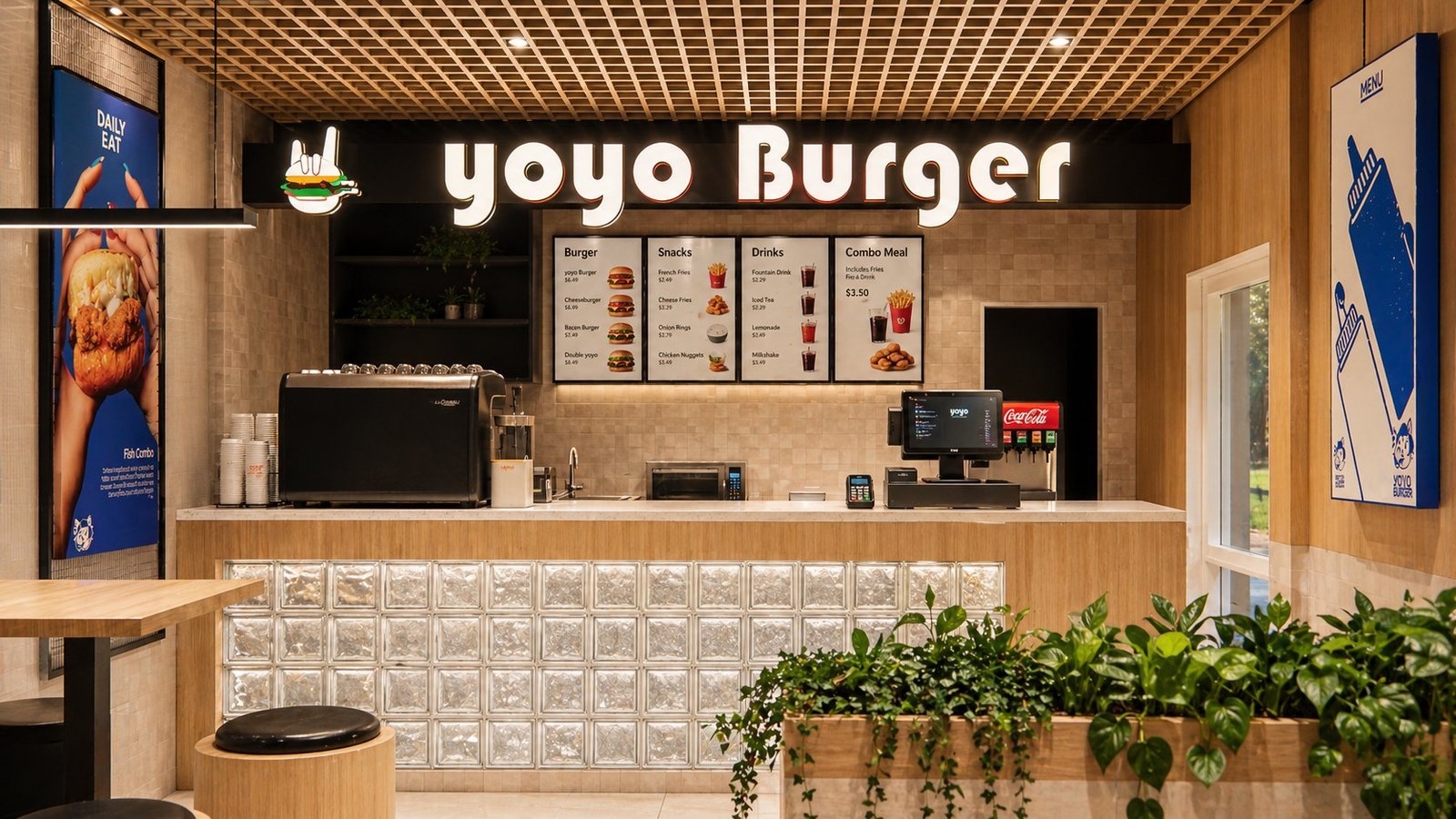
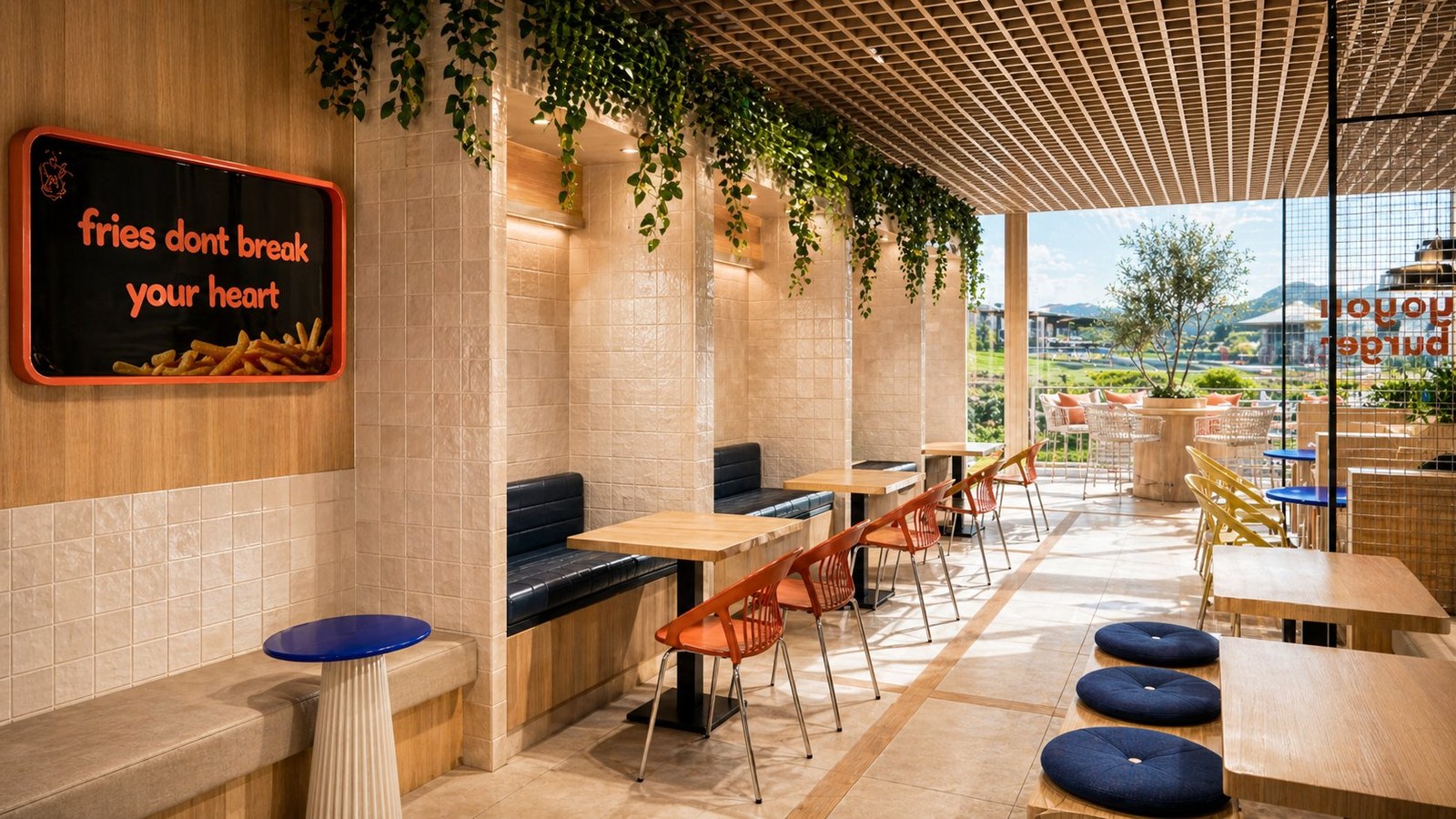
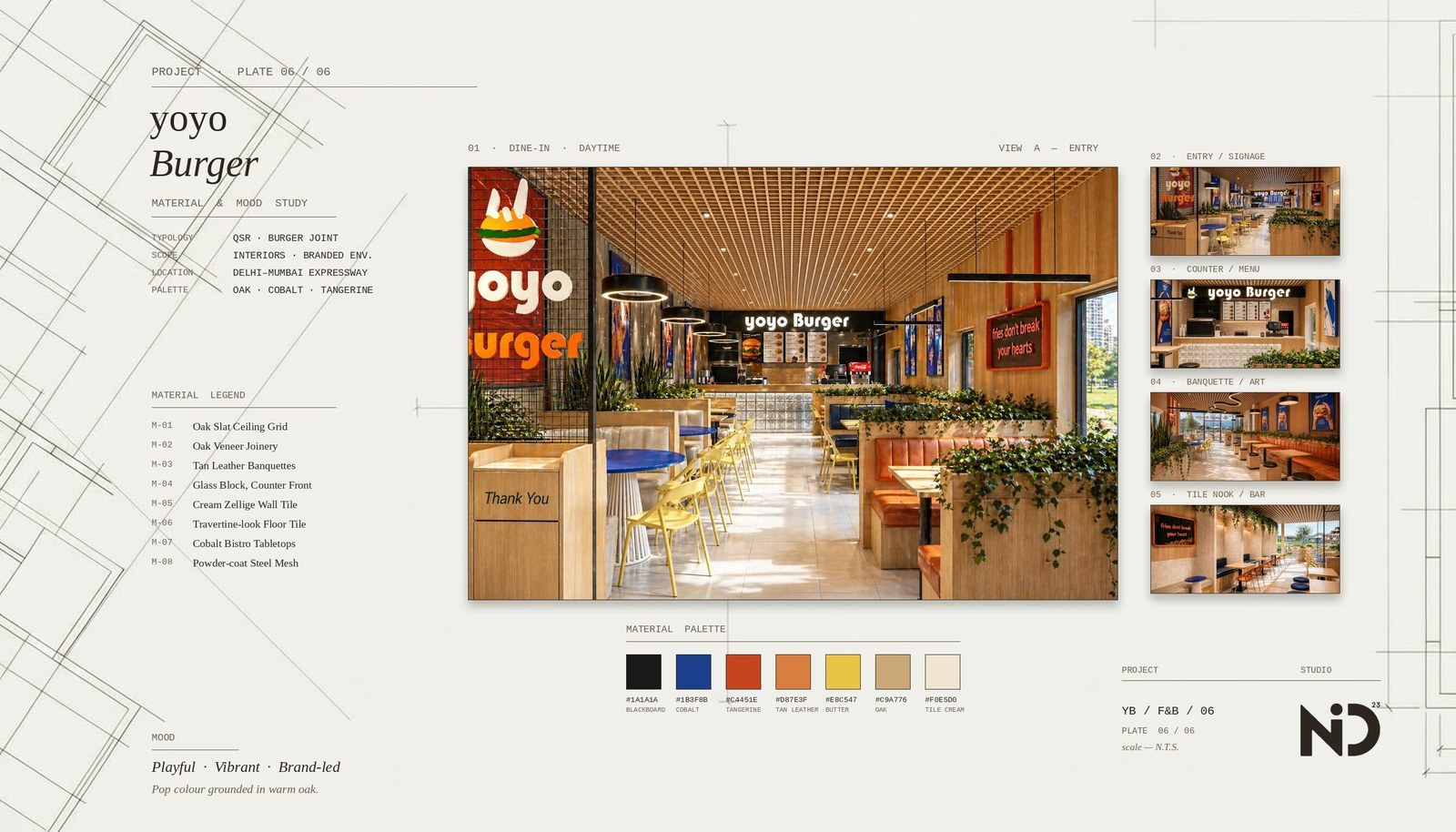
yoyo Burger was my first commercial project. I am writing this two days after handover, which means everything I think I know is probably going to look slightly wrong in three months. That is fine. I am writing it down anyway, because by the third month I will have forgotten what was hard about it.
What was hard about it was that a burger joint is not a home. I had spent three years designing rooms where the goal was for the room to disappear under the people who live in it. A QSR is the opposite. The room has to do work. It has to move people through. It has to feed a brand identity that is louder than anything I would ever bring into a residential project. And it has to do all of this on the Delhi to Mumbai expressway, where most of the customers will see the space for eleven minutes.
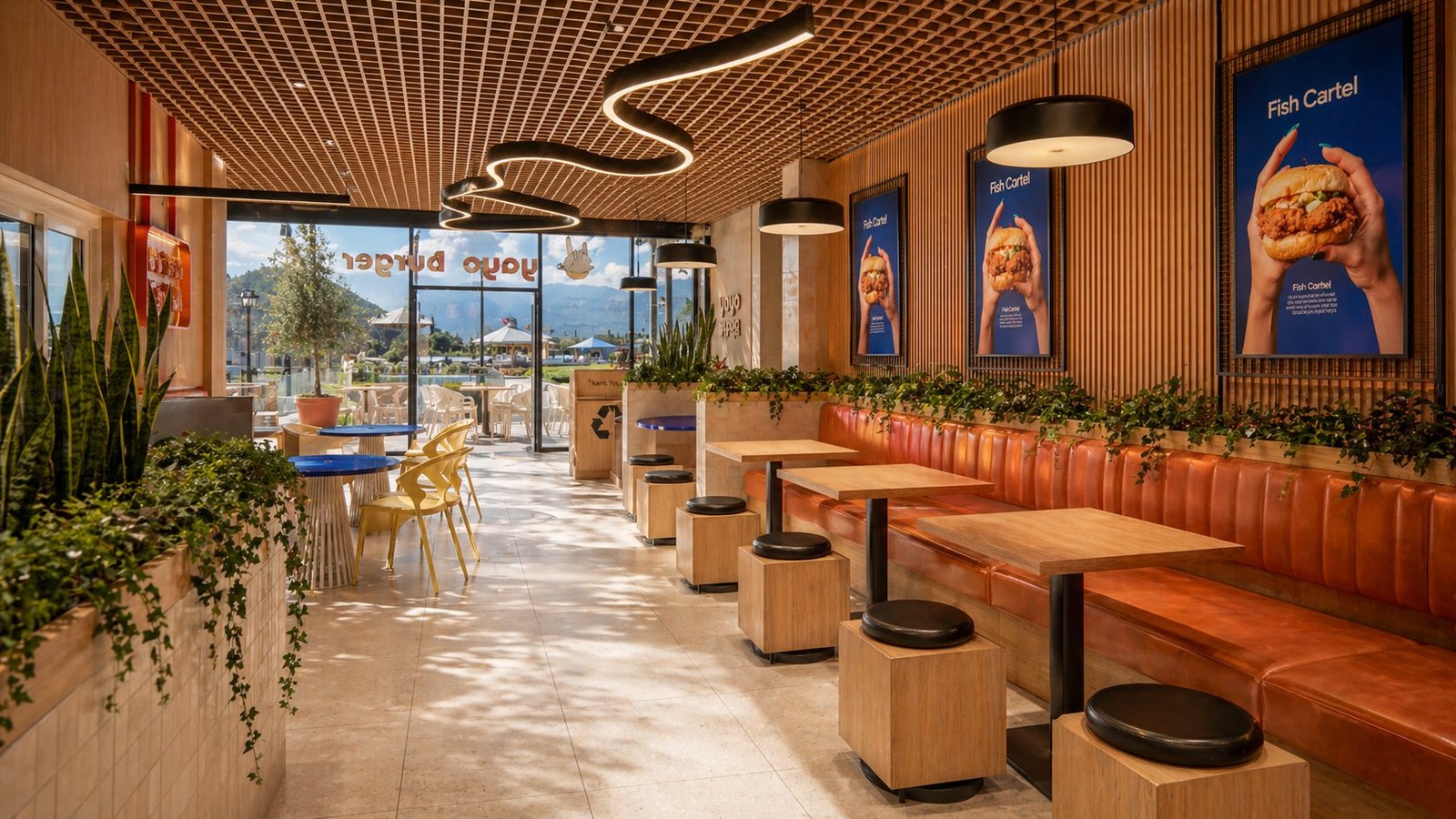
The first thing I got wrong was the ceiling. I had drawn a flat acoustic plane, because I was thinking like a residential designer. Keep it quiet. Let the brand colours on the walls do the talking. The brand team pushed back. They wanted the ceiling to be the first thing you saw. They were right. We replaced the flat plane with an oak slat grid that runs the full length of the dining hall. It does three things at once. Adds warmth to a space that is otherwise loud with brand colour. Diffuses the light. Gives the room a rhythm. I will use that ceiling again.
The second thing I got wrong was the cobalt. The brand identity uses a deep cobalt blue, and we put it on the bistro tabletops because that is what the brand book said. In the daytime it sings. At night, under the warm pendants, it goes slightly muddy. We will relight the dining area in phase two. The lesson is small, and I am still embarrassed by it. Test the brand colours under the actual lighting before you sign off, not just under showroom whites.
The third thing, and this is the one I am most proud of because I almost lost the argument, is the banquette. The brand team wanted yellow plastic chairs everywhere. Faster turnover. Easier to clean. On brand. I argued for one long run of tan leather banquette down the long wall, with the yellow chairs only on the high traffic side. I argued that the banquette would slow people down by twenty minutes, and that twenty minutes is twenty minutes of additional fries, drinks, and dessert. They tested it for two weeks. The numbers came back. The banquette stayed.
Residential teaches you patience. Commercial teaches you to defend your patience with numbers. I think I will be a better residential designer for having done this project. A home wants to disappear. A burger joint wants to perform. I had to learn the difference.
Three ways to work with the studio. Pick the one that matches your project, or write to us and we will help you decide.
When you need one specific thing, not a whole package. Pick what you need from the menu.
Concept to drawings to materials. The complete studio design, ready to hand to a contractor.
Everything in the full package, plus we run the build for you. You move in. We hand you the keys.
Every Nichedesigns23 project follows the same five-stage rhythm. We move at the pace the work asks for, and never rush a stage to finish on time.
A long first meeting at the studio, on site, or on a call. We ask about the people, not the pinterest board. How you live, who visits, what you have outgrown, what you have always wanted. We listen more than we draw.
Plans, sections, sketches. We test every idea on paper first, then in 3D. You see two or three honest directions, not twelve safe ones. We refine until the drawings feel less like a design and more like a decision.
Travertine, walnut, brass, lime-wash plaster, hand-loomed jute. We bring physical samples to the table and you touch every one before we commit. Nothing is specified by photograph alone.
We work with our own millworkers, stone-cutters and electricians. The studio is on site weekly. You receive a short report every Friday with photographs, decisions, and what is coming next week. No surprises.
Snag list closed, dust gone, plants watered. We hand you a printed studio book of the finished project, photographed by us. The keys come with a single instruction. Live in it. Tell us in a year what we got right and what we did not.
Most residences move from first conversation to handover in six to nine months. Larger villas and commercial work, twelve to eighteen. We take on a small number of projects each year because the work asks for it.
Tell us about your space. We respond within one working day, then schedule a 30-minute consultation.